
Advanced Fire Modeling
Advanced fire modeling relies on a precise vocabulary that enables engineers to describe complex phenomena, select appropriate computational tools, and interpret simulation outcomes with confidence. The following exposition defines the most…
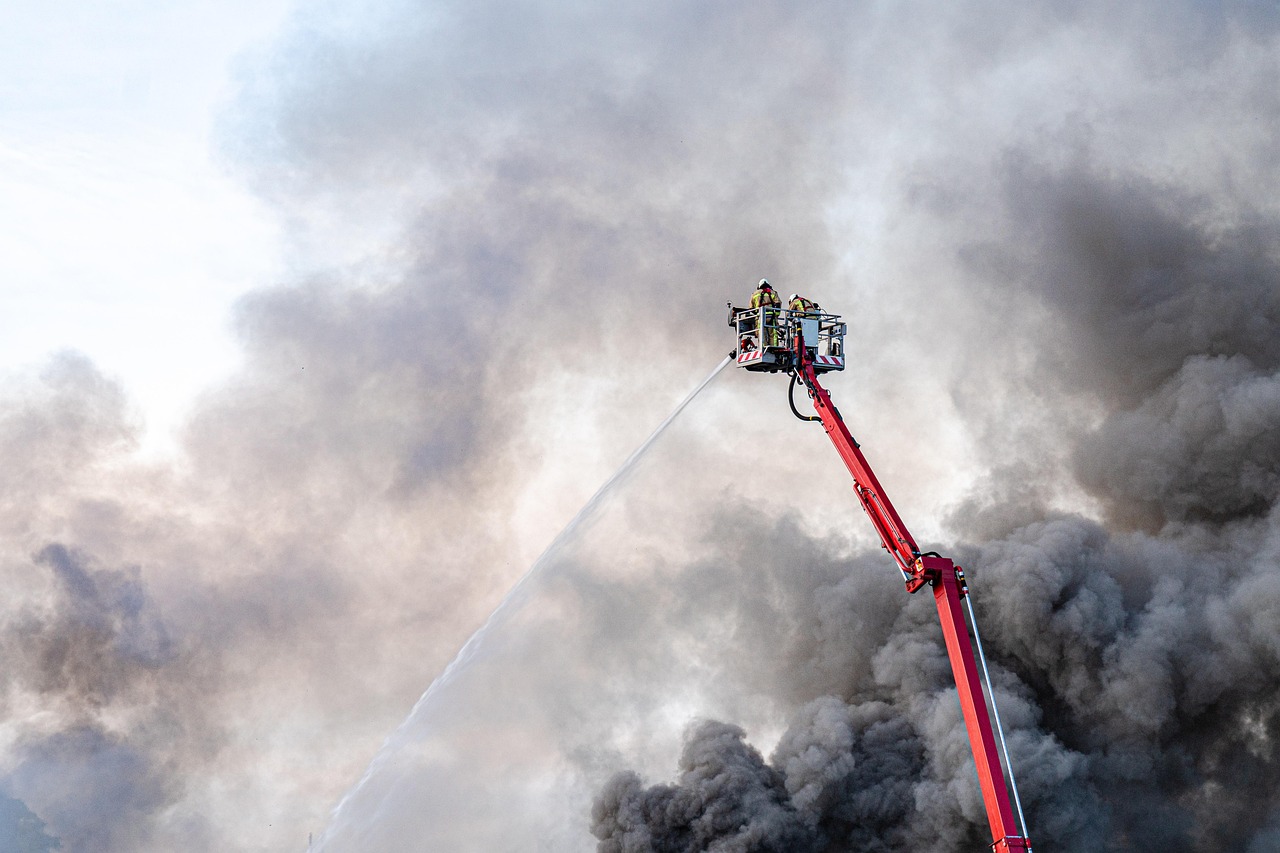
Advanced fire modeling relies on a precise vocabulary that enables engineers to describe complex phenomena, select appropriate computational tools, and interpret simulation outcomes with confidence. The following exposition defines the most frequently encountered terms, illustrates their practical relevance, and highlights common challenges that arise when applying them in real‑world projects. Each definition is crafted to support postgraduate‑level study, assuming familiarity with fundamental fire science while extending into the specialized language of modern simulation techniques.
Heat Release Rate (HRR) is the primary metric describing the intensity of a fire. It represents the energy liberated per unit time, typically expressed in kilowatts (kW) or megawatts (MW). HRR drives the growth of temperature, smoke, and flame spread, and therefore forms the cornerstone of every fire model. In practice, engineers obtain HRR curves from calorimetry tests, standardized fire source data, or material combustion properties. A common challenge is translating bench‑scale HRR data to full‑scale scenarios, where ventilation, geometry, and fuel distribution can significantly alter the effective rate.
Fire Growth Rate characterizes how quickly HRR escalates after ignition. It is usually classified into categories such as slow, medium, fast, or ultra‑fast, corresponding to specific t‑squared curves (HRR = αt²). The growth coefficient α is a critical input for zone models and simplified CFD simulations, influencing predictions of flashover time and smoke layer development. Selecting an inappropriate growth rate can lead to under‑estimation of evacuation times or over‑design of suppression systems.
Fire Load denotes the total combustible energy available per unit floor area, expressed in MJ/m². It is calculated by summing the heat of combustion of each material multiplied by its mass and dividing by the area. Fire load informs the selection of design fire scenarios and the sizing of detection and suppression equipment. In mixed‑use buildings, varying fire loads across zones pose a modeling challenge, requiring spatially resolved inputs to capture localized flashover potential.
Flame Spread describes the rate at which visible flames propagate across a combustible surface. It is measured in mm/s or ft/min and is influenced by material properties, surface geometry, and ambient airflow. While flame spread is a surface phenomenon, its impact on HRR is indirect; faster spread typically yields higher HRR earlier in the fire’s life. Modeling flame spread often involves empirical correlations, which may not capture complex interactions in multi‑material assemblies.
Smoke Production Rate quantifies the mass of smoke generated per unit time, usually in kg/s. It is closely linked to HRR through the soot yield and the fuel’s pyrolysis characteristics. Accurate smoke production rates are essential for predicting visibility, tenability, and the performance of smoke control systems. A major difficulty lies in the variability of soot yields for the same material under different heating rates, requiring careful selection of source terms in CFD codes.
Visibility is the distance at which an observer can discern a standard object, such as a 10‑mm black square, under smoke conditions. Visibility is a function of smoke concentration, particle size distribution, and illumination. In fire modeling, visibility thresholds (e.g., 10 m for safe egress) are used to assess tenability and to trigger evacuation alarms. Translating model‑derived smoke mass fractions to visibility involves the application of empirical relationships like the Smoke Optical Density (SOD) method.
Tenability encompasses the conditions under which occupants can survive and evacuate safely, considering temperature, toxic gas concentrations, and visibility. Tenability criteria are often expressed as limits for CO, CO₂, HCN, and O₂, as well as maximum temperature thresholds. Advanced fire models integrate tenability calculations by coupling HRR, smoke production, and ventilation to predict the evolution of hazardous environments. A persistent challenge is the accurate representation of compartment mixing, which can cause localized pockets of high toxicity that are difficult to capture with coarse meshes.
Compartment refers to a bounded space within a building, such as a room, hallway, or atrium, that can be treated as a distinct fire zone. Compartment geometry (volume, surface area, openings) directly influences pressure, temperature, and smoke stratification. In zone models, compartments are represented by a uniform temperature and pressure field, whereas CFD models resolve spatial variations. Defining appropriate compartment boundaries is crucial for modeling fire spread through doors and ventilation ducts.
Opening denotes any aperture that allows airflow between compartments or between a compartment and the exterior. Openings are characterized by their area, discharge coefficient, and orientation. The effective opening size determines the ventilation rate, which in turn controls the fire’s growth regime (ventilation‑limited vs. fuel‑limited). In practice, modeling the dynamic behavior of doors (e.g., opening during egress) requires time‑dependent boundary conditions, adding complexity to the simulation.
Ventilation is the process by which air enters and leaves a compartment, driven by pressure differences created by fire‑induced buoyancy and mechanical systems. Ventilation controls the supply of oxygen and the removal of hot gases, thereby influencing HRR, flame height, and smoke layer thickness. Accurate ventilation modeling demands precise specification of opening characteristics and, for mechanically ventilated spaces, fan curves and control logic.
Pressure Differential arises when a fire creates a stack effect, causing higher pressure at the fire plume compared to surrounding spaces. This pressure gradient drives airflow through openings, affecting both fire growth and smoke migration. In zone models, pressure differentials are calculated from mass and energy balances; in CFD, they emerge naturally from the Navier‑Stokes equations. Small errors in pressure prediction can lead to significant discrepancies in smoke layer formation.
Stack Effect is a natural ventilation phenomenon caused by temperature‑induced density differences between indoor and outdoor air. In tall buildings, the stack effect can dominate airflow patterns, especially when doors are open. Incorporating stack effect into fire models requires the inclusion of external temperature profiles and building height, which can be overlooked in simplified analyses.
Fire Dynamics is the study of the physical and chemical processes that govern fire behavior, including combustion, heat transfer, fluid flow, and smoke production. Mastery of fire dynamics is essential for interpreting model outputs and for selecting appropriate modeling approaches. For example, understanding the transition from laminar to turbulent plume flow guides mesh refinement decisions in CFD simulations.
Conduction describes heat transfer through solid materials by molecular vibration and electron movement. In fire modeling, conduction is important for predicting temperature rise in structural elements, which can affect fire resistance ratings. Conduction is often modeled with thermal conductivity values that vary with temperature, necessitating iterative solution techniques in transient simulations.
Convection is the transport of heat by the movement of fluids, encompassing both natural (buoyancy‑driven) and forced (mechanical) flows. Convection dominates heat transfer in fire plumes and between the fire and surrounding air. In CFD, convection is resolved by solving the momentum equations, while zone models approximate it through prescribed ventilation rates. Accurate convection modeling is critical for predicting flame height and smoke layer stratification.
Radiation refers to heat transfer by electromagnetic waves, primarily in the infrared spectrum for fire scenarios. Radiation can account for a significant portion of total heat flux, especially in large open‑space fires where flame surfaces are extensive. Modeling radiation often involves the use of the radiative heat transfer equation (RHTE) or simplified models such as the geometric view factor method. Selecting an appropriate radiation model is a trade‑off between computational cost and accuracy; neglecting radiation can underestimate temperatures on exposed surfaces.
Flame Height is the vertical extent of the visible flame column above the fuel surface. It correlates with HRR and ventilation conditions, often estimated by empirical formulas such as H = 0.235 · (Q)^(2/5) for well‑ventilated fires, where Q is the HRR in kW. Flame height informs the design of sprinkler activation thresholds and ceiling clearance requirements. In CFD, flame height emerges from the resolved combustion and buoyancy fields, but coarse meshes may artificially suppress plume development.
Flashover denotes the near‑simultaneous ignition of all combustible surfaces in a compartment, typically occurring when the upper layer temperature reaches approximately 600 °C. Flashover is a critical event in fire safety design, as it marks the transition to a fully developed fire with rapid HRR escalation. Predicting flashover timing requires accurate modeling of heat transfer to compartment surfaces, ventilation rates, and the accumulation of hot gases. Zone models often use the critical heat flux criterion, whereas CFD can capture the detailed temperature distribution leading up to flashover.
Soot Yield is the mass of soot produced per unit mass of fuel consumed, expressed in kg/kg. Soot yield influences smoke density, visibility, and radiative heat transfer. Materials with high soot yields, such as plastics, generate thick, opaque smoke, while low‑soot fuels produce clearer plumes. In fire modeling, soot yield is an input to the combustion source term; uncertainties in this parameter can lead to large errors in predicted visibility and tenability.
Pyrolysis is the thermal decomposition of solid fuels into volatile gases and char in the absence of oxygen. Pyrolysis rates determine the release of combustible gases, which in turn control HRR. Modeling pyrolysis often involves the use of kinetic schemes, such as first‑order Arrhenius reactions, with temperature‑dependent rate constants. A common challenge is capturing the transition from surface heating to bulk decomposition in thick panels, which may require multi‑layer modeling approaches.
Solid Fuel Model represents the behavior of solid combustible materials in fire simulations. These models incorporate pyrolysis, heat of combustion, and char formation. Examples include the solid fuel model in the Fire Dynamics Simulator (FDS) and the propagation model in the CFAST zone code. Selecting the appropriate solid fuel model depends on the level of detail required and the availability of material data.
Gas Fuel Model treats the fire as a release of combustible gases, typically appropriate for pool fires, gas leaks, or vented fires. Gas fuel models simplify the combustion process by assuming a known fuel composition and mixing behavior. They are useful for benchmarking CFD codes against analytical solutions but may not capture the complexities of solid fuel pyrolysis.
Fire Dynamics Simulator (FDS) is a computational fluid dynamics (CFD) code developed by the National Institute of Standards and Technology (NIST) for simulating fire-driven fluid flow. FDS solves the Navier‑Stokes equations on a staggered grid, incorporating combustion, heat transfer, and radiation models. It is widely used for performance‑based fire safety design, smoke control analysis, and forensic investigations. Proper mesh design, time‑step selection, and material property specification are essential to obtain reliable results.
Computational Fluid Dynamics (CFD) refers to the numerical solution of fluid flow equations, typically the continuity, momentum, and energy equations, to predict velocity, pressure, temperature, and species concentration fields. In fire engineering, CFD enables detailed analysis of plume dynamics, smoke transport, and thermal environments. However, CFD is computationally intensive; achieving convergence while maintaining reasonable runtimes demands judicious simplifications, such as using large‑eddy simulation (LES) turbulence models or adopting wall‑function treatments for near‑wall flows.
Large‑Eddy Simulation (LES) is a turbulence modeling approach that resolves the larger, energy‑containing eddies directly while modeling the smaller scales. LES is favored in fire modeling because it captures the unsteady, vortex‑driven nature of fire plumes better than Reynolds‑averaged Navier‑Stokes (RANS) models. The price for this fidelity is increased computational cost and sensitivity to grid resolution. Selecting an appropriate sub‑grid scale model, such as the Smagorinsky‑type model, is critical for accurate LES results.
Reynolds‑Averaged Navier‑Stokes (RANS) models average the turbulent fluctuations, solving for mean flow quantities. Common RANS models in fire CFD include the k‑ε and k‑ω families. While less demanding computationally, RANS can under‑predict plume entrainment and flame spreading, especially in highly unsteady fires. Engineers often use RANS for preliminary investigations or for large‑scale building simulations where fine detail is less critical.
Zone Model simplifies a compartment into a well‑mixed volume, applying conservation of mass, energy, and species to predict temperature, pressure, and smoke concentration. The most widely used zone model in fire engineering is the Consolidated Model of Fire and Smoke Transport (CFAST). Zone models are valuable for rapid assessments, design of smoke control systems, and parametric studies. Their main limitation is the assumption of uniform conditions, which can overlook localized hot spots or stratified smoke layers.
Consolidated Model of Fire and Smoke Transport (CFAST) is a two‑zone (upper and lower) model that computes the evolution of temperature, gas composition, and smoke layer height in compartments. CFAST uses input parameters such as fire growth rate, opening areas, and material properties to solve coupled ordinary differential equations. It is especially useful for evaluating tenability and sprinkler activation times in multi‑compartment buildings. Users must be cautious about the sensitivity of results to the assumed inter‑zone mixing coefficient, which is often calibrated empirically.
Two‑Zone Model refers to the conceptual division of a compartment into an upper hot layer and a lower cool layer, separated by a distinct interface. This model captures the stratification of smoke and hot gases, providing a more realistic representation than single‑zone models while retaining computational efficiency. Two‑zone models form the basis of many fire safety codes for design of smoke vents and fire‑rated doors.
Thermal Radiation Model in CFD predicts the exchange of radiative heat between surfaces and the participating gas phase. Common approaches include the finite‑volume method (FVM), the P‑1 approximation, and the Monte‑Carlo method. The choice of model affects both accuracy and runtime. For example, the P‑1 model is less accurate for optically thick smoke but demands far fewer computational resources than a full Monte‑Carlo simulation.
Participating Media describes gases that absorb, emit, and scatter thermal radiation, such as soot‑laden smoke. Modeling participating media requires specification of absorption coefficients, scattering coefficients, and the spectral distribution of radiation. In fire simulations, the soot volume fraction often serves as the primary parameter governing radiation. Neglecting scattering can lead to under‑prediction of radiative heat fluxes to distant surfaces.
Flame Radiation is the portion of radiative heat emitted directly by the flame, as opposed to that emitted by hot gases or soot. Flame radiation depends on flame temperature, emissivity, and geometry. In many CFD codes, flame radiation is approximated using the gray‑gas model, which assumes a wavelength‑independent absorption coefficient. Accurately capturing flame radiation becomes important when assessing the thermal load on nearby equipment or structural elements.
Heat Transfer Coefficient quantifies the convective heat exchange between a solid surface and the surrounding fluid, expressed in W/(m²·K). In fire modeling, heat transfer coefficients are used to calculate surface heating rates, which influence fire spread and structural response. Empirical correlations, such as the Dittus‑Boelter equation for turbulent flow, provide estimates, but the presence of buoyancy‑driven plumes can invalidate standard correlations, necessitating CFD‑derived coefficients.
Char Layer forms on the surface of solid fuels as pyrolysis progresses, acting as an insulating barrier that slows further heat penetration. Char formation rate and its thermal conductivity are critical for predicting the time to flashover in compartments containing wood or other cellulosic materials. Modeling char layers often involves a coupled heat‑and‑mass transfer problem, where the char thickness evolves with time and influences the effective HRR.
Fire Suppression System encompasses devices designed to control or extinguish a fire, such as sprinklers, water mist, foam, or gaseous agents. In fire modeling, suppression systems are represented by source terms that remove heat or combustible gases. For sprinklers, the activation time is typically linked to a temperature threshold, while the discharge rate follows a standard flow equation (e.g., the K‑factor relationship). Simulating suppression accurately requires time‑dependent boundary conditions and consideration of water–steam interaction, which can be computationally demanding.
Sprinkler Activation is triggered when the ambient temperature at the sprinkler head exceeds a predefined rating, commonly 68 °C for residential applications. In CFD, the temperature field at the sprinkler location is monitored, and once the threshold is crossed, a water source is introduced. The challenge lies in capturing the local temperature rise caused by a nearby flame, which may be highly transient and spatially variable.
Water Mist System generates fine droplets that absorb heat through evaporation, providing rapid cooling of the fire plume. Modeling water mist involves coupling the droplet dynamics with the gas phase, accounting for droplet breakup, evaporation, and momentum exchange. This multiphase interaction increases the complexity of the simulation and often necessitates sub‑grid models for droplet distribution.
Gaseous Suppression Agent (e.g., FM‑200, CO₂) displaces oxygen or interferes with the combustion chemical chain reactions. In fire models, the agent is introduced as a species with a prescribed concentration, and its effectiveness is evaluated using a critical concentration threshold for extinguishment. Accurately representing the agent’s distribution requires solving for species transport, which can be sensitive to ventilation and mixing rates.
Thermal Decomposition is the breakdown of a material due to heat, leading to the formation of volatile gases and char. This process is central to solid‑fuel fire modeling. Decomposition kinetics are often expressed using Arrhenius parameters, where the pre‑exponential factor and activation energy define the temperature dependence. Obtaining reliable kinetic data for novel building materials is an ongoing research challenge.
Enthalpy is a thermodynamic property representing the total heat content of a system, typically expressed in kJ/kg. In fire modeling, the specific enthalpy of gases influences buoyancy forces, plume rise, and heat transfer to surrounding structures. Enthalpy calculations must account for temperature‑dependent specific heat capacities, especially at temperatures exceeding 500 °C where gas properties change markedly.
Specific Heat Capacity (cₚ) defines the amount of heat required to raise the temperature of a unit mass by one degree Kelvin. Materials with high specific heat can absorb more energy before their temperature rises significantly, thereby delaying flashover. In simulations, specific heat values are often temperature‑dependent, requiring interpolation from material property tables.
Thermal Conductivity (k) measures a material’s ability to conduct heat. Low‑conductivity materials, such as insulation, slow heat transfer, while high‑conductivity metals quickly transmit heat, potentially igniting adjacent combustibles. Accurate thermal conductivity data across a wide temperature range is essential for transient heat transfer calculations in fire models.
Density influences buoyancy-driven flows; hot gases have lower density than ambient air, creating upward motion. In fire simulations, the density of the gas mixture is computed from the ideal gas law, incorporating temperature, pressure, and composition. Errors in density estimation can affect plume velocity predictions and, consequently, smoke transport.
Viscosity determines the resistance of a fluid to deformation. Air viscosity increases with temperature, altering the turbulent characteristics of the fire plume. In CFD, viscosity is part of the momentum equations and influences the Reynolds number, which in turn affects turbulence model selection.
Reynolds Number (Re) is a dimensionless quantity expressing the ratio of inertial to viscous forces in a flow. High Re indicates turbulent flow, typical of fire plumes, while low Re suggests laminar behavior. Calculating Re for a given fire scenario helps decide whether LES or RANS turbulence modeling is appropriate.
Prandtl Number (Pr) is the ratio of momentum diffusivity (kinematic viscosity) to thermal diffusivity. It characterizes the relative thickness of velocity and thermal boundary layers. In fire modeling, Pr influences heat transfer predictions near solid surfaces, especially when using wall functions in CFD.
Grashof Number (Gr) quantifies buoyancy-driven flow strength relative to viscous forces. It is defined as Gr = g β ΔT L³/ν², where g is gravity, β the thermal expansion coefficient, ΔT the temperature difference, L a characteristic length, and ν the kinematic viscosity. Large Gr values indicate strong natural convection, a hallmark of fire plumes. Understanding Gr helps in mesh design, ensuring that the buoyant flow is adequately resolved.
Fire Plume is the column of hot gases rising above a fire source, driven by buoyancy. The plume entrains surrounding air, diluting the combustion products and influencing flame height. Plume behavior is often described by the classic plume theory of Morton, Taylor, and Turner, which provides analytical expressions for velocity and temperature profiles. In CFD, the plume is resolved by solving the full set of governing equations, but adequate mesh refinement near the fire core is necessary to capture the steep gradients.
Entrainment refers to the process by which ambient air is drawn into the fire plume, mixing with hot gases and affecting combustion efficiency. Entrainment rates depend on fire size, ventilation, and ambient turbulence. Under‑estimating entrainment can lead to over‑prediction of flame temperature and under‑prediction of smoke spread.
Fire Spread encompasses both flame spread across surfaces and the progression of fire from one compartment to another. In modeling, inter‑compartment spread is often represented by opening flow rates and heat transfer through walls. Accurate prediction of fire spread is crucial for designing fire barriers and for performing probabilistic risk assessments.
Fire Barrier is a construction element designed to resist fire penetration, typically rated in hours (e.g., a 2‑hour fire wall). In fire models, barriers are represented by thermal resistance values and by limiting species transport across the barrier. The challenge lies in modeling the barrier’s degradation over time, especially under intense heat fluxes.
Fire Resistance Rating quantifies the duration a structural element can withstand fire exposure while maintaining its load‑bearing capacity. The rating is based on standard test methods (e.g., ASTM E119). In fire simulations, the rating informs the allowable temperature rise in the element, which can be compared against model predictions to assess compliance.
Structural Fire Engineering integrates fire modeling with structural analysis to assess the performance of buildings under fire conditions. This interdisciplinary approach requires coupling temperature fields from fire simulations with material property degradation models (e.g., steel strength reduction). One of the main challenges is the transfer of data between different software platforms while preserving temporal resolution.
Thermal Deformation occurs when temperature gradients induce differential expansion, potentially leading to buckling or failure of structural components. Predicting thermal deformation involves solving coupled heat transfer and mechanical equations. In practice, engineers often use simplified beam or shell models with temperature‑dependent material properties to estimate deformation.
Fire Load Density is another term for fire load, emphasizing the distribution of combustible energy per unit area. High fire load density areas, such as kitchens or storage rooms, demand more detailed modeling, often with localized HRR inputs.
Fire Scenario defines a specific set of assumptions about ignition location, fuel, ventilation, and fire growth, used as a basis for simulation. Developing realistic fire scenarios requires collaboration with fire investigators and knowledge of building use patterns. Scenario selection heavily influences the conservatism of design outcomes.
Parametric Study involves systematically varying model inputs (e.g., opening size, fire growth rate) to assess their impact on key outputs such as smoke layer height or sprinkler activation time. Parametric studies are essential for sensitivity analysis and for identifying critical design parameters. However, they can become computationally expensive when using high‑fidelity CFD models, prompting the use of surrogate models or reduced‑order techniques.
Uncertainty Quantification addresses the inherent variability in model inputs and the resulting spread in output predictions. Techniques such as Monte Carlo simulation, Latin hypercube sampling, or Bayesian inference are employed to quantify uncertainty. In fire modeling, uncertainties stem from material properties, ventilation conditions, and ignition likelihood, and they must be communicated clearly to stakeholders.
Validation is the process of comparing model predictions against experimental data or real‑world fire incidents to assess accuracy. Validation builds confidence in the model’s applicability to new situations. Common validation datasets include the NIST fire experiments, the UL fire tests, and large‑scale fire drills. A key challenge is the limited availability of high‑quality data for complex, multi‑compartment fires.
Verification ensures that the numerical implementation of the governing equations is correct, typically by checking conservation of mass, momentum, and energy within the simulation. Verification tests may involve simple benchmark problems with known analytical solutions, such as laminar flow in a pipe or heat conduction in a slab.
Calibration adjusts model parameters to improve agreement with observed data. In practice, calibration may involve tuning the inter‑zone mixing coefficient in a zone model or modifying the soot yield in a CFD simulation. Over‑calibration can reduce the model’s predictive capability for scenarios outside the calibration set, so a balance must be struck.
Mesh Independence Study examines how changes in grid resolution affect simulation results. By progressively refining the mesh and monitoring key outputs (e.g., peak temperature, flame height), engineers determine the point at which further refinement yields negligible differences. This study is essential for establishing confidence in CFD results while managing computational resources.
Time Step Sensitivity assesses the influence of the numerical time increment on solution stability and accuracy. In fire simulations, the Courant‑Friedrichs‑Lewy (CFL) condition often dictates the maximum allowable time step based on mesh size and local flow velocity. Selecting an overly large time step can cause non‑physical oscillations or loss of detail in rapid fire growth phases.
Boundary Condition specifies the behavior of the flow at the limits of the computational domain. Common boundary conditions include pressure outlets, velocity inlets, symmetry planes, and wall functions. Accurate representation of openings, such as doors or vents, requires dynamic boundary conditions that can change state during the simulation (e.g., open, close, or partially open).
Wall Function approximates the near‑wall turbulent flow behavior without resolving the viscous sub‑layer, reducing mesh requirements. Wall functions are widely used in fire CFD to model heat transfer from hot gases to walls. However, they assume equilibrium turbulence, which may not hold in rapidly changing fire environments, potentially leading to errors in wall temperature predictions.
Heat Flux is the rate of heat transfer per unit area, measured in kW/m². In fire modeling, heat flux to surfaces determines ignition risk, material degradation, and sprinkler activation. Heat flux can be convective, radiative, or a combination. Sensors in real fires often measure heat flux to validate model predictions.
Ignition Temperature is the minimum temperature at which a material will sustain combustion after exposure to a heat source. This property is critical when assessing fire spread across different finishes or structural elements. In simulations, ignition is typically modeled by applying a temperature or heat flux threshold to a surface, after which a fire source term is activated.
Fire Detection System includes smoke detectors, heat detectors, and flame detectors. Modeling detection systems involves placing virtual sensors within the computational domain and monitoring the relevant parameters (e.g., smoke concentration, temperature). The response time of detectors influences the activation of suppression systems and the overall fire safety strategy.
Alarm Time is the elapsed time from ignition to the activation of the fire alarm system. Accurate prediction of alarm time is essential for life‑safety design, as it determines the available egress time. Alarm time is affected by detector placement, sensitivity, and the rate of fire growth.
Egress Modeling simulates the movement of occupants during evacuation, often coupling fire model outputs (temperature, visibility, toxic gas concentrations) with crowd dynamics models. Egress modeling helps verify that occupants can escape within the available safe egress time (SET). Integrating CFD results with egress simulation can be computationally intensive, requiring simplified fire outputs or surrogate models.
Safe Egress Time (SET) is the maximum duration occupants have to evacuate safely before conditions become untenable. SET is derived from tenability criteria, such as temperature limits (< 60 °C) and visibility thresholds (< 10 m). Accurate SET calculation depends on reliable fire model predictions of temperature and smoke distribution.
Compartment Fire Model is a generic term for any model that treats a fire within a bounded space, encompassing both zone and CFD approaches. It emphasizes the importance of the compartment’s geometry, material properties, and ventilation in shaping fire behavior.
Fire Suppression Effectiveness measures how well a suppression system reduces HRR, temperature, or smoke concentration. Effectiveness is often expressed as a percentage reduction relative to an uncontrolled fire. Evaluating effectiveness requires baseline simulations (no suppression) for comparison, highlighting the need for consistent modeling assumptions across scenarios.
Post‑Flashover Phase occurs after the entire compartment has ignited, characterized by a rapid rise in HRR and temperature. Modeling the post‑flashover phase demands fine temporal resolution to capture the steep gradients in temperature and gas composition. It also challenges numerical stability, as the flow becomes highly turbulent and compressible.
Hydrostatic Pressure is the pressure exerted by a fluid at rest due to gravity. In fire compartments, hydrostatic pressure influences the distribution of smoke layers, especially in tall atria where the smoke column can be several meters thick. Incorporating hydrostatic effects improves the accuracy of smoke layer height predictions.
Thermal Buoyancy drives the upward motion of hot gases, creating the characteristic plume structure. The buoyancy force is proportional to the temperature difference between the hot gases and the ambient air. In CFD, buoyancy is modeled through the Boussinesq approximation or full variable‑density formulations, each with trade‑offs in accuracy and computational cost.
Smoke Control System consists of mechanical fans, dampers, and vents designed to manage smoke movement during a fire. Modeling such systems requires specifying fan curves, control logic, and interaction with fire‑driven pressures. The effectiveness of a smoke control system is evaluated by the reduction in smoke layer height and the maintenance of tenable conditions in egress routes.
Positive Pressure Ventilation (PPV) introduces high‑pressure air into a fire area to push smoke out. In fire modeling, PPV is represented by a prescribed inlet velocity or pressure boundary condition. The challenge lies in capturing the interaction between the PPV jet and the fire plume, which can create complex recirculation zones.
Negative Pressure Ventilation (NPV) uses exhaust fans to draw smoke out, creating a pressure differential that pulls fresh air in through designated inlets. Modeling NPV involves setting up suction boundary conditions and ensuring that the resulting flow field aligns with the intended smoke extraction paths.
Computational Domain defines the spatial region over which the governing equations are solved. The domain must be large enough to contain all relevant flow features, such as plume rise and smoke spread, while avoiding unnecessary computational expense. Extending the domain too far can dilute mesh resolution, whereas a domain that is too small may artificially constrain flow patterns.
Sub‑Grid Scale Model addresses the effects of turbulent eddies smaller than the mesh size in LES. Common sub‑grid models include the Smagorinsky model and the dynamic model. The choice of sub‑grid model influences the predicted mixing rates of smoke and hot gases, affecting tenability assessments.
Species Transport Equation governs the convection and diffusion of chemical species (e.g., O₂, CO, CO₂, HCN) in the flow field. Solving these equations enables prediction of toxic gas concentrations, which are vital for tenability analysis. Accurate species transport requires appropriate diffusion coefficients and source terms for combustion products.
Combustion Model describes the chemical reactions converting fuel to heat and products. In fire CFD, common combustion models include the mixture fraction approach, the eddy‑dissipation model, and detailed finite‑rate chemistry. The mixture fraction model simplifies combustion by assuming a single scalar representing the ratio of fuel to oxidizer, making it computationally efficient for large‑scale simulations.
Mixture Fraction is a scalar field ranging from 0 (pure oxidizer) to 1 (pure fuel), used in simplified combustion models to compute temperature and species concentrations. The mixture fraction approach assumes that combustion occurs instantaneously at a stoichiometric mixture, which is reasonable for many fire scenarios but may miss flame extinction or incomplete combustion effects.
Finite‑Rate Chemistry incorporates detailed reaction mechanisms with specific rate constants, allowing the simulation of intermediate species and pollutant formation (e.g., HCN). While providing higher fidelity, finite‑rate chemistry dramatically increases computational demand and may require reduced mechanisms to remain tractable for building‑scale fires.
Reaction Rate defines the speed at which a chemical reaction proceeds, typically expressed in mol/(m³·s). In fire modeling, reaction rates are temperature‑dependent and are often described by Arrhenius expressions. Accurate reaction rate parameters are essential for predicting HRR and toxic gas production.
Damper is a controllable opening that can restrict or allow airflow. In fire models, dampers are represented by variable opening areas that can be programmed to close automatically upon fire detection, thereby limiting fire spread. Modeling damper actuation timing and failure modes adds complexity to fire safety analysis.
Fire Door is a door with a fire‑resistance rating, designed to prevent fire and smoke from passing through openings. In simulations, fire doors are modeled with reduced opening areas and sometimes with a temperature‑dependent closure mechanism (e.g., a door that closes when the temperature exceeds a threshold).
Thermal Expansion describes the increase in material dimensions with temperature rise. In fire modeling, thermal expansion can affect gap sizes around doors and windows, influencing ventilation rates. Including thermal expansion effects can improve the realism of simulations involving metal frames that expand significantly under high heat flux.
Fire Growth Curve plots HRR versus time, illustrating the phases of ignition, growth, fully developed, and decay. Commonly used curves include the t‑squared growth for the growth phase and exponential decay for the decay phase. Selecting an appropriate growth curve is essential for matching the fire scenario to the intended design criteria.
Fire Decay Phase follows the peak HRR, characterized by a reduction in heat release as fuel is consumed or ventilation is limited. Modeling decay accurately requires knowledge of the remaining fuel mass and the ventilation conditions that may suppress or sustain combustion.
Fuel Load Distribution refers to how combustible material is spatially arranged within a compartment. Uniform distributions simplify modeling, but real buildings often have clustered fuel loads (e.g., storage racks). Incorporating realistic fuel distribution improves the prediction of localized flashover and heat flux patterns.
Heat Transfer Path describes the route through which heat moves from the fire to a target surface, including conduction through walls, convection through air, and radiation across gaps. Identifying dominant heat transfer paths assists in prioritizing protective measures, such as adding insulation or reflective coatings.
Radiant Heat Flux Sensor measures the radiative component of heat flux in fire tests. Data from such sensors are used to validate radiative heat transfer models in CFD, ensuring that the simulated flame radiation matches experimental observations.
Thermal Imaging Camera captures temperature distributions on surfaces during fire experiments. These images provide valuable validation data for temperature fields predicted by CFD, particularly for assessing the spread of hot gases along walls.
Fire Scenario Matrix is a systematic arrangement of multiple fire scenarios varying key parameters (e.g., ignition location, fire load, ventilation). Using a matrix approach facilitates comprehensive risk assessment and helps identify worst‑case conditions for design.
Performance‑Based Design relies on quantitative fire modeling to demonstrate compliance with fire safety objectives, rather than prescriptive code requirements. This design philosophy demands robust modeling practices, thorough validation, and clear documentation of assumptions.
Design Fire is the fire scenario selected for safety design, often representing a
Key takeaways
- Advanced fire modeling relies on a precise vocabulary that enables engineers to describe complex phenomena, select appropriate computational tools, and interpret simulation outcomes with confidence.
- A common challenge is translating bench‑scale HRR data to full‑scale scenarios, where ventilation, geometry, and fuel distribution can significantly alter the effective rate.
- The growth coefficient α is a critical input for zone models and simplified CFD simulations, influencing predictions of flashover time and smoke layer development.
- In mixed‑use buildings, varying fire loads across zones pose a modeling challenge, requiring spatially resolved inputs to capture localized flashover potential.
- While flame spread is a surface phenomenon, its impact on HRR is indirect; faster spread typically yields higher HRR earlier in the fire’s life.
- A major difficulty lies in the variability of soot yields for the same material under different heating rates, requiring careful selection of source terms in CFD codes.
- Translating model‑derived smoke mass fractions to visibility involves the application of empirical relationships like the Smoke Optical Density (SOD) method.