
Biomechanics and Injury Prevention
Biomechanics is a field that combines the principles of biology and mechanics to study the structure and function of biological systems, particularly humans. In the context of sports coaching, understanding biomechanics is crucial as it hel…
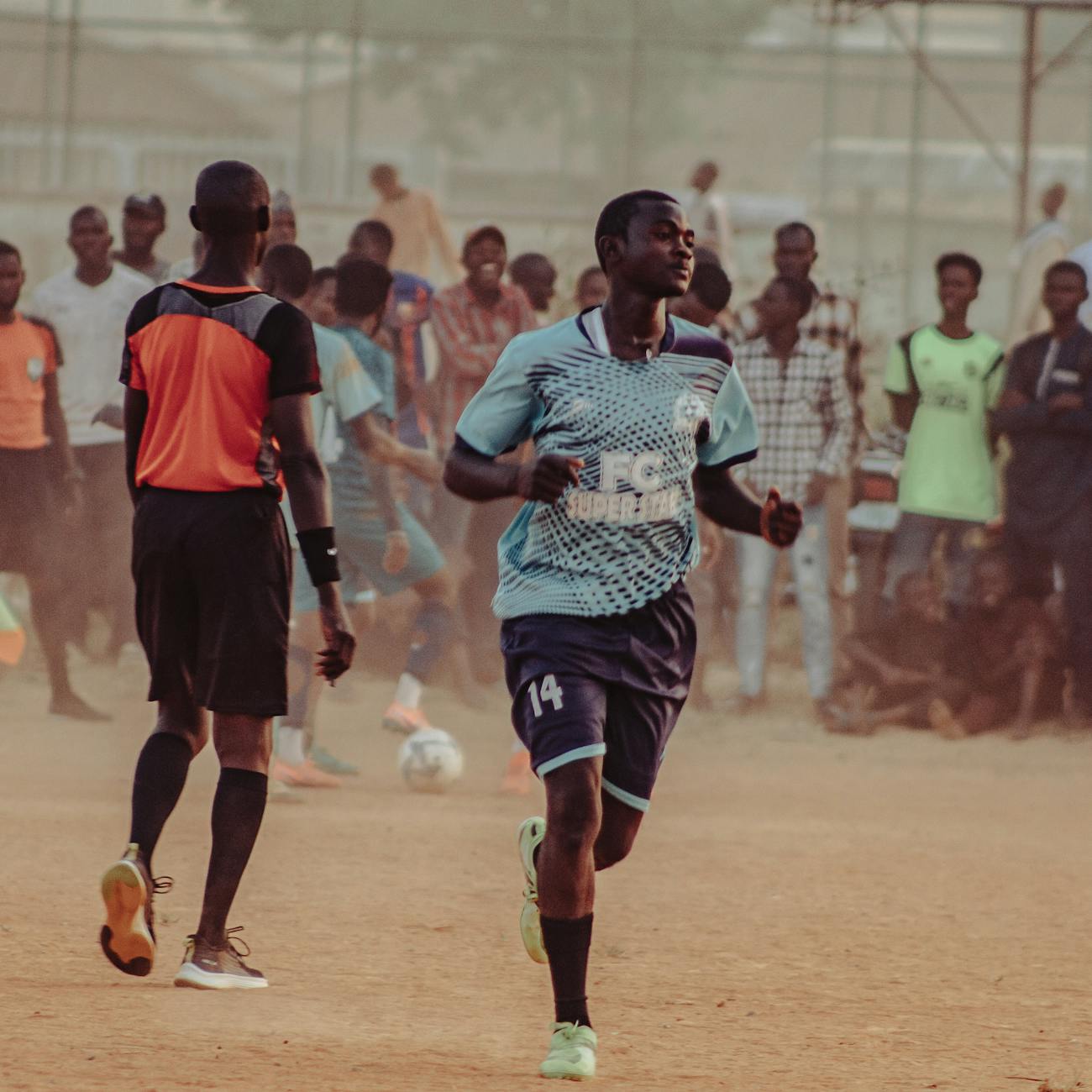
Biomechanics is a field that combines the principles of biology and mechanics to study the structure and function of biological systems, particularly humans. In the context of sports coaching, understanding biomechanics is crucial as it helps coaches analyze and optimize movement patterns to enhance performance and prevent injuries. This section will delve into key terms and vocabulary related to biomechanics and injury prevention in sports coaching.
### Key Terms:
1. **Biomechanics**: The study of the mechanical aspects of living organisms, including humans, and how they interact with their surroundings during movement.
2. **Kinematics**: The branch of biomechanics that deals with the description of motion, including displacement, velocity, and acceleration.
3. **Kinetics**: The branch of biomechanics that focuses on the forces that cause motion, including the study of forces, torques, and moments.
4. **Joint Kinematics**: The study of motion at joints in the human body, including the range of motion, joint angles, and joint axes.
5. **Muscle Activation**: The process by which a muscle generates force through the recruitment of motor units.
6. **Center of Mass (COM)**: The point at which the mass of an object is concentrated, often used to describe the balance and stability of an athlete during movement.
7. **Ground Reaction Force (GRF)**: The force exerted by the ground on a body in contact with it, crucial for understanding movement patterns and energy transfer.
8. **Injury Prevention**: Strategies and techniques aimed at reducing the risk of injuries in athletes, including proper training, equipment, and biomechanical analysis.
9. **Biomechanical Analysis**: The process of evaluating movement patterns, joint mechanics, and forces to identify areas of improvement and reduce the risk of injury.
10. **Range of Motion (ROM)**: The extent to which a joint can move, crucial for flexibility, performance, and injury prevention.
### Vocabulary:
1. **Angular Velocity**: The rate of change of angular position of a body with respect to time, measured in degrees per second or radians per second.
2. **Torque**: The rotational equivalent of force, causing an object to rotate around an axis, calculated as the product of force and lever arm.
3. **Stability**: The ability of an athlete to maintain balance and control during movement, influenced by factors such as center of mass and base of support.
4. **Impulse**: The product of force and time, representing the change in momentum of an object, crucial for understanding collisions and impact forces.
5. **Mechanical Advantage**: The ratio of the output force exerted by a system to the input force applied to it, important for analyzing leverage and efficiency in movement.
6. **Inertia**: The resistance of an object to changes in its state of motion, influenced by its mass and distribution.
7. **Elasticity**: The ability of a material to deform under stress and return to its original shape once the stress is removed, important for understanding energy storage and release in movements.
8. **Biomechanical Efficiency**: The ability of an athlete to produce maximum output with minimal energy expenditure, often achieved through optimal movement patterns and technique.
9. **Proprioception**: The sense of the relative position of one's own body parts and strength of effort being employed in movement, crucial for coordination and injury prevention.
10. **Dynamic Stability**: The ability of an athlete to maintain balance and control during dynamic movements, such as running, jumping, and cutting.
### Examples:
1. *Example 1 - Kinematics*: A coach analyzing a sprinter's running technique may focus on the athlete's stride length, frequency, and foot strike pattern to optimize performance and reduce the risk of injuries.
2. *Example 2 - Muscle Activation*: During a weightlifting session, a coach may cue an athlete to engage their core muscles to stabilize the spine and prevent excessive loading on the lower back.
3. *Example 3 - Center of Mass*: A gymnast performing a balance beam routine must position their center of mass over the beam to maintain stability and avoid falling off.
4. *Example 4 - Ground Reaction Force*: A basketball player jumping for a layup exerts a significant ground reaction force to propel themselves upward and generate the necessary vertical velocity.
5. *Example 5 - Range of Motion*: A tennis player with limited shoulder range of motion may be at a higher risk of shoulder injuries due to the restricted movement during overhead serves.
### Practical Applications:
1. **Biomechanical Analysis in Sports**: Coaches can use video analysis and motion capture technology to assess athletes' movement patterns and provide feedback for improvement.
2. **Prehabilitation Programs**: Incorporating specific exercises and drills to address biomechanical imbalances and weaknesses can help athletes prevent injuries before they occur.
3. **Equipment Optimization**: Properly fitting and adjusting sports equipment, such as footwear and protective gear, can enhance biomechanical efficiency and reduce the risk of injuries.
4. **Technique Correction**: Coaches can use biomechanical principles to identify and correct faulty movement patterns that may predispose athletes to injuries during training and competition.
5. **Periodization**: Integrating biomechanical principles into training programs can help coaches design periodized plans that gradually increase load and intensity to prevent overuse injuries.
### Challenges:
1. *Challenge 1 - Individual Differences*: Athletes have unique biomechanical profiles, making it challenging to apply general principles to every athlete. Coaches must tailor their approach to each individual.
2. *Challenge 2 - Real-time Feedback*: Providing immediate biomechanical feedback during training or competition can be difficult. Coaches need to develop strategies to offer timely corrections and cues.
3. *Challenge 3 - Multifactorial Nature of Injuries*: Injuries in sports often result from a combination of biomechanical, physiological, and external factors. Coaches must consider the holistic approach to injury prevention.
4. *Challenge 4 - Integration of Technology*: While technology offers valuable tools for biomechanical analysis, coaches must be proficient in using and interpreting data to make informed decisions for injury prevention.
5. *Challenge 5 - Long-term Monitoring*: Preventing injuries requires ongoing monitoring of athletes' biomechanics and movement patterns. Coaches need to establish protocols for regular assessments and adjustments.
By understanding and applying key terms, vocabulary, examples, practical applications, and challenges related to biomechanics and injury prevention in sports coaching, coaches can optimize performance, reduce the risk of injuries, and support the long-term development of their athletes.
Key takeaways
- In the context of sports coaching, understanding biomechanics is crucial as it helps coaches analyze and optimize movement patterns to enhance performance and prevent injuries.
- **Biomechanics**: The study of the mechanical aspects of living organisms, including humans, and how they interact with their surroundings during movement.
- **Kinematics**: The branch of biomechanics that deals with the description of motion, including displacement, velocity, and acceleration.
- **Kinetics**: The branch of biomechanics that focuses on the forces that cause motion, including the study of forces, torques, and moments.
- **Joint Kinematics**: The study of motion at joints in the human body, including the range of motion, joint angles, and joint axes.
- **Muscle Activation**: The process by which a muscle generates force through the recruitment of motor units.
- **Center of Mass (COM)**: The point at which the mass of an object is concentrated, often used to describe the balance and stability of an athlete during movement.