
Machine Learning for Disaster Risk Reduction
Machine Learning is a subset of artificial intelligence that focuses on the development of algorithms and models that can learn from and make predictions or decisions based on data. In the context of Disaster Risk Reduction , machine learni…
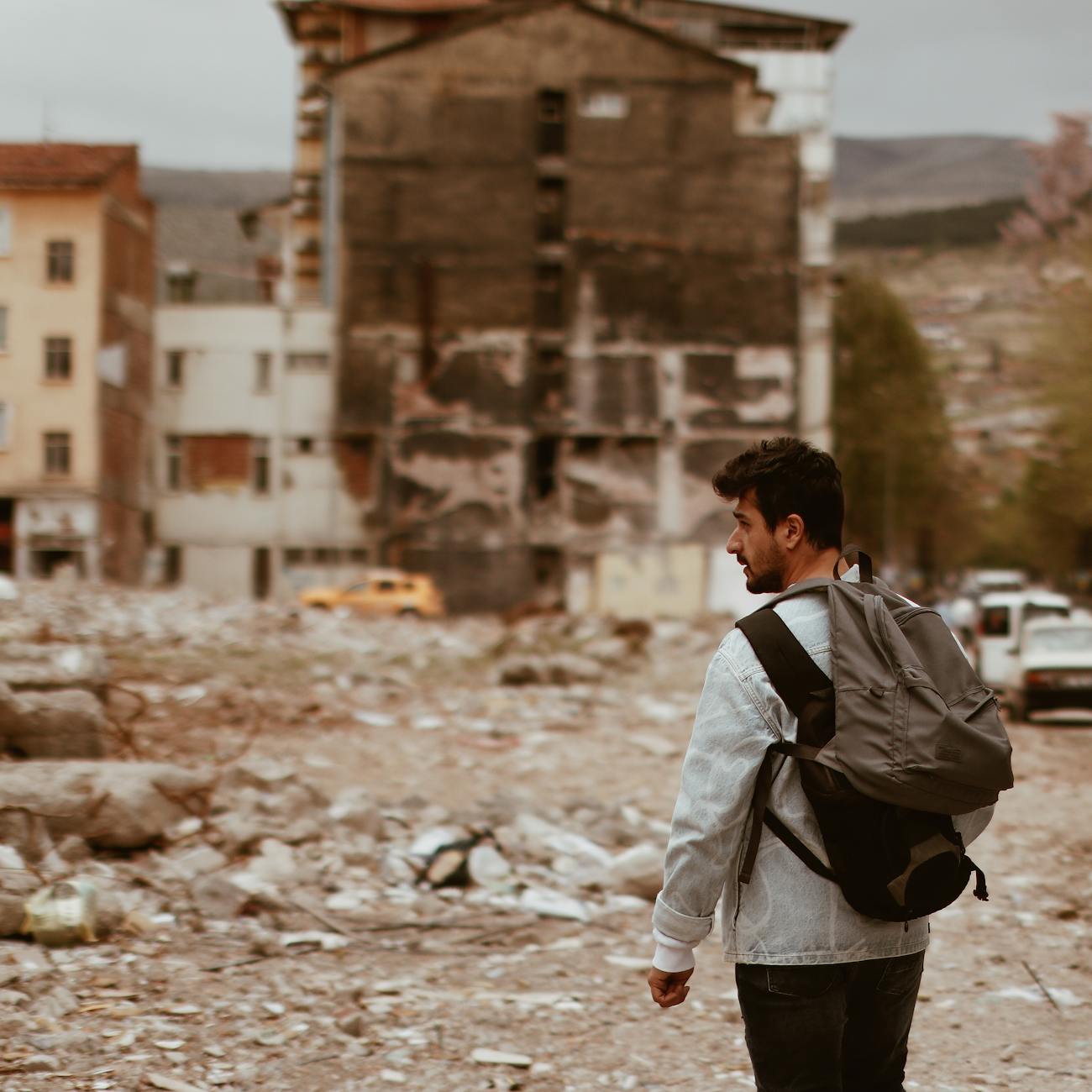
Machine Learning is a subset of artificial intelligence that focuses on the development of algorithms and models that can learn from and make predictions or decisions based on data. In the context of Disaster Risk Reduction, machine learning can be used to analyze and interpret data to improve disaster preparedness, response, and recovery efforts.
Supervised Learning is a type of machine learning where the algorithm is trained on a labeled dataset, meaning that the input data is paired with the correct output. The algorithm learns to map inputs to outputs based on the provided examples. For example, in disaster risk reduction, supervised learning can be used to predict the likelihood of a natural disaster based on historical data.
Unsupervised Learning is another type of machine learning where the algorithm is given a dataset without any labels. The algorithm learns to find patterns and relationships in the data without being explicitly told what to look for. Unsupervised learning can be useful in disaster risk reduction for clustering similar events or identifying anomalies in data.
Reinforcement Learning is a type of machine learning where an agent learns to make decisions by interacting with an environment. The agent receives rewards or penalties based on its actions and learns to maximize its rewards over time. Reinforcement learning can be applied in disaster risk reduction for optimizing resource allocation during a crisis.
Feature Engineering is the process of selecting, transforming, and creating new features from raw data to improve the performance of machine learning models. In disaster risk reduction, feature engineering can involve extracting relevant information from satellite imagery, social media posts, or sensor data to better predict and mitigate risks.
Model Evaluation is the process of assessing the performance of a machine learning model on unseen data. Common metrics for evaluating models include accuracy, precision, recall, and F1 score. In disaster risk reduction, it is essential to evaluate models accurately to ensure they are reliable and can be used effectively in decision-making.
Hyperparameter Tuning is the process of selecting the optimal hyperparameters for a machine learning algorithm to improve its performance. Hyperparameters are parameters that are set before the learning process begins and can impact how well the model learns. In disaster risk reduction, hyperparameter tuning can help optimize models for specific tasks.
Deep Learning is a subset of machine learning that uses artificial neural networks to learn complex patterns from data. Deep learning models can automatically discover features from raw data and are particularly effective for tasks such as image recognition and natural language processing. In disaster risk reduction, deep learning can be used to analyze satellite imagery for early detection of potential hazards.
Convolutional Neural Networks (CNNs) are a type of deep learning model commonly used for image analysis. CNNs are designed to automatically learn spatial hierarchies of features from images, making them well-suited for tasks such as object detection and segmentation. In disaster risk reduction, CNNs can be used to analyze satellite images for identifying damaged infrastructure after a disaster.
Recurrent Neural Networks (RNNs) are another type of deep learning model that is well-suited for sequential data, such as time series or text. RNNs have memory cells that allow them to retain information about past inputs, making them effective for tasks such as speech recognition and language translation. In disaster risk reduction, RNNs can be used to analyze trends in historical data to predict future disasters.
Long Short-Term Memory (LSTM) networks are a type of RNN that are designed to overcome the vanishing gradient problem, which can occur when training deep neural networks on long sequences of data. LSTMs have gates that control the flow of information, allowing them to learn long-term dependencies in data. In disaster risk reduction, LSTMs can be used to forecast the impact of climate change on disaster frequency and intensity.
Autoencoders are a type of neural network that learns to reconstruct its input data. Autoencoders consist of an encoder network that compresses the input data into a lower-dimensional representation and a decoder network that reconstructs the original input from the compressed representation. In disaster risk reduction, autoencoders can be used for anomaly detection in sensor data to identify potential hazards.
Transfer Learning is a machine learning technique where a model trained on one task is adapted for a related task. Transfer learning can help improve the performance of models when there is limited labeled data available for training. In disaster risk reduction, transfer learning can be used to leverage pre-trained models for tasks such as damage assessment or evacuation planning.
Geographic Information Systems (GIS) are systems designed to capture, store, analyze, manage, and present spatial or geographic data. GIS technology is widely used in disaster risk reduction for mapping hazards, vulnerabilities, and exposure to improve decision-making and planning. Integrating GIS with machine learning can enhance the accuracy and efficiency of risk assessments and emergency response efforts.
Remote Sensing is the process of collecting and analyzing information about the Earth's surface from a distance. Remote sensing technologies, such as satellites and drones, can capture valuable data for disaster risk reduction, including monitoring land use changes, detecting natural hazards, and assessing damage after a disaster. By combining remote sensing data with machine learning algorithms, it is possible to extract valuable insights for disaster preparedness and response.
Social Media Analytics refers to the process of analyzing social media data to extract valuable information for decision-making. Social media platforms can provide real-time information during disasters, including eyewitness accounts, photos, and videos. By applying machine learning techniques to social media data, it is possible to identify trends, sentiment, and emerging risks that can inform disaster response strategies.
Challenges in Machine Learning for Disaster Risk Reduction include limited labeled data, data quality issues, interpretability of models, and ethical considerations. It is crucial to address these challenges to ensure the reliability and effectiveness of machine learning applications in disaster risk reduction. Additionally, interdisciplinary collaboration between data scientists, domain experts, and policymakers is essential to develop robust solutions that address the complex challenges of disaster management.
Key takeaways
- Machine Learning is a subset of artificial intelligence that focuses on the development of algorithms and models that can learn from and make predictions or decisions based on data.
- Supervised Learning is a type of machine learning where the algorithm is trained on a labeled dataset, meaning that the input data is paired with the correct output.
- Unsupervised learning can be useful in disaster risk reduction for clustering similar events or identifying anomalies in data.
- Reinforcement Learning is a type of machine learning where an agent learns to make decisions by interacting with an environment.
- In disaster risk reduction, feature engineering can involve extracting relevant information from satellite imagery, social media posts, or sensor data to better predict and mitigate risks.
- In disaster risk reduction, it is essential to evaluate models accurately to ensure they are reliable and can be used effectively in decision-making.
- Hyperparameter Tuning is the process of selecting the optimal hyperparameters for a machine learning algorithm to improve its performance.