
Machine Learning for Renewable Energy Data
Machine Learning (ML) is a subset of Artificial Intelligence (AI) that enables computer systems to learn and improve from experience without explicit programming. In the context of Renewable Energy (RE) Forecasting, ML algorithms can be use…
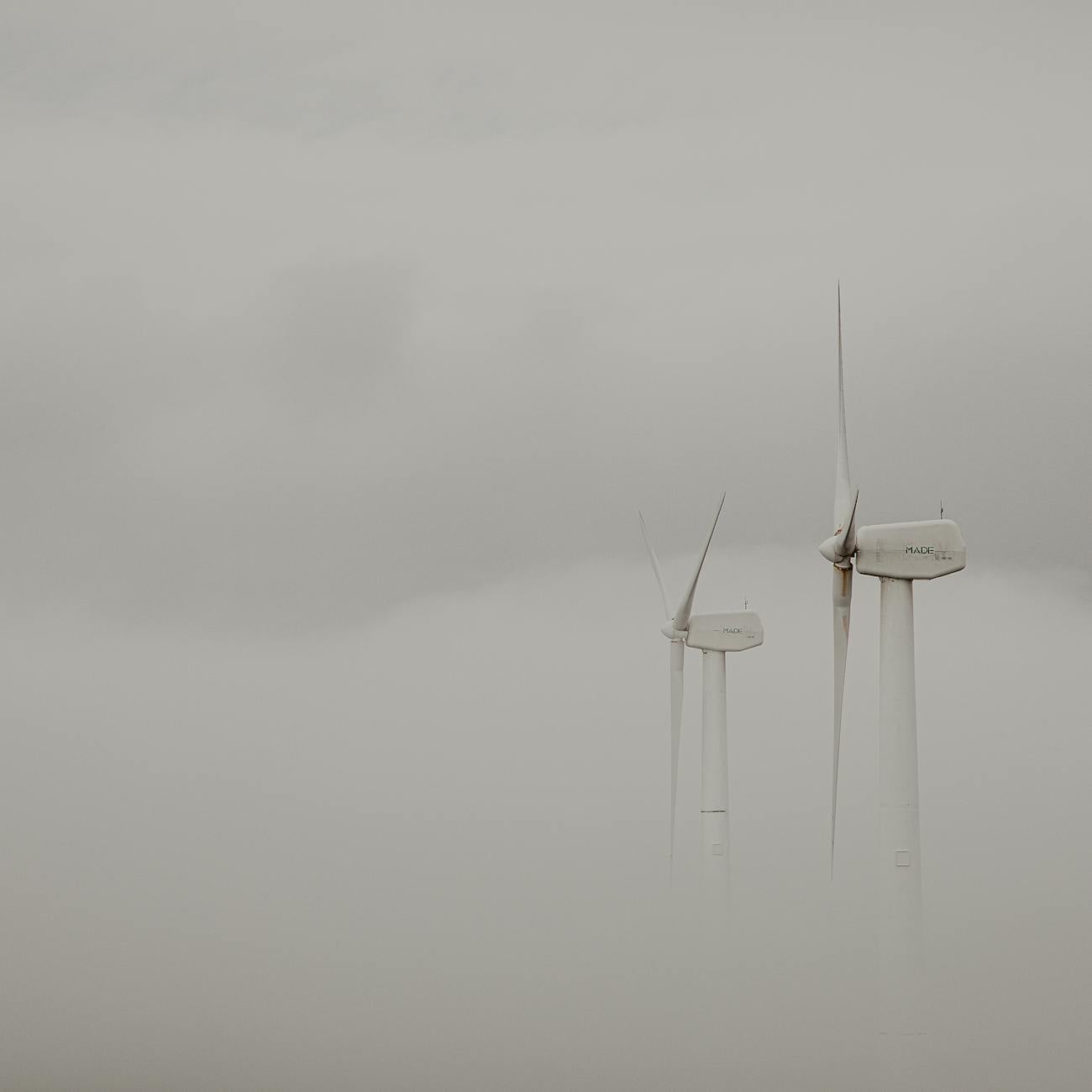
Machine Learning (ML) is a subset of Artificial Intelligence (AI) that enables computer systems to learn and improve from experience without explicit programming. In the context of Renewable Energy (RE) Forecasting, ML algorithms can be used to predict the output of renewable energy systems, such as solar panels or wind turbines, based on historical data and various environmental factors. Here are some key terms and vocabulary related to Machine Learning for Renewable Energy Data:
1. **Renewable Energy**: Energy obtained from natural resources that can be replenished over time, such as solar, wind, hydro, and geothermal energy. 2. **Forecasting**: The process of estimating future values or events based on historical data and statistical models. 3. **Machine Learning**: A type of AI that enables computer systems to learn and improve from experience without explicit programming. 4. **Supervised Learning**: A type of ML where the algorithm is trained on labeled data, i.e., data with known input-output pairs. 5. **Unsupervised Learning**: A type of ML where the algorithm is trained on unlabeled data, i.e., data without known input-output pairs. 6. **Regression**: A statistical method used to model the relationship between a dependent variable and one or more independent variables. 7. **Classification**: A statistical method used to predict the categorical class of a target variable based on input features. 8. **Time Series Analysis**: A statistical technique used to analyze time-series data, such as hourly or daily renewable energy production data. 9. **Feature Selection**: The process of selecting the most relevant input variables or features for a ML model. 10. **Cross-Validation**: A technique used to evaluate the performance of a ML model by splitting the dataset into training and testing sets. 11. **Overfitting**: A situation where a ML model is too complex and fits the training data too closely, resulting in poor generalization to new data. 12. **Underfitting**: A situation where a ML model is too simple and fails to capture the underlying patterns in the data. 13. **Hyperparameters**: Parameters that are set before training a ML model, such as the learning rate, regularization strength, and number of hidden layers. 14. **Optimization**: The process of tuning hyperparameters to improve the performance of a ML model. 15. **Gradient Descent**: A optimization algorithm used to minimize the loss function of a ML model by iteratively adjusting the model parameters in the direction of the negative gradient. 16. **Deep Learning**: A type of ML that uses multiple layers of neural networks to learn complex patterns in data. 17. **Convolutional Neural Networks (CNN)**: A type of deep learning architecture commonly used for image recognition tasks. 18. **Recurrent Neural Networks (RNN)**: A type of deep learning architecture commonly used for sequential data analysis, such as time series forecasting. 19. **Long Short-Term Memory (LSTM)**: A type of RNN architecture that can learn long-term dependencies in sequential data. 20. **Data Preprocessing**: The process of cleaning, transforming, and preparing data for ML analysis.
Now let's dive deeper into some of these concepts.
### Supervised Learning
Supervised learning is a type of ML where the algorithm is trained on labeled data, i.e., data with known input-output pairs. For example, in the context of renewable energy forecasting, the input features might include historical weather data, such as temperature, humidity, and wind speed, and the output variable might be the hourly solar irradiance or wind power output. The ML model is trained to learn the mapping between the input features and the output variable.
There are various types of supervised learning algorithms, including linear regression, logistic regression, decision trees, random forests, and neural networks. The choice of algorithm depends on the nature of the data and the problem at hand.
### Unsupervised Learning
Unsupervised learning is a type of ML where the algorithm is trained on unlabeled data, i.e., data without known input-output pairs. The goal of unsupervised learning is to discover hidden patterns or structure in the data.
One common unsupervised learning technique is clustering, which involves grouping data points based on similarity. For example, in the context of renewable energy, clustering can be used to group similar weather patterns or load profiles.
### Feature Selection
Feature selection is the process of selecting the most relevant input variables or features for a ML model. The goal of feature selection is to reduce the dimensionality of the data, improve the model performance, and reduce the computational cost.
There are various feature selection techniques, including filter methods, wrapper methods, and embedded methods. Filter methods use statistical measures, such as correlation or mutual information, to select features based on their relevance to the output variable. Wrapper methods use ML algorithms to evaluate the performance of different feature subsets and select the best one. Embedded methods incorporate feature selection as part of the ML algorithm itself.
### Cross-Validation
Cross-validation is a technique used to evaluate the performance of a ML model by splitting the dataset into training and testing sets. The idea is to train the model on a portion of the data and test it on the remaining portion. This process is repeated multiple times with different training and testing sets to obtain a more robust estimate of the model performance.
There are various cross-validation techniques, including k-fold cross-validation, leave-one-out cross-validation, and stratified cross-validation. The choice of cross-validation technique depends on the nature of the data and the problem at hand.
### Overfitting and Underfitting
Overfitting is a situation where a ML model is too complex and fits the training data too closely, resulting in poor generalization to new data. Overfitting can be caused by various factors, including high model complexity, insufficient data, and noisy data.
Underfitting is a situation where a ML model is too simple and fails to capture the underlying patterns in the data. Underfitting can be caused by various factors, including low model complexity, insufficient data, and inappropriate model assumptions.
To avoid overfitting and underfitting, it is important to select an appropriate model complexity, use sufficient and clean data, and perform model validation and evaluation.
### Hyperparameters and Optimization
Hyperparameters are parameters that are set before training a ML model, such as the learning rate, regularization strength, and number of hidden layers. The choice of hyperparameters can have a significant impact on the model performance.
Optimization is the process of tuning hyperparameters to improve the performance of a ML model. There are various optimization techniques, including grid search, random search, and Bayesian optimization.
### Gradient Descent
Gradient descent is an optimization algorithm used to minimize the loss function of a ML model by iteratively adjusting the model parameters in the direction of the negative gradient. The gradient represents the direction of the steepest ascent of the loss function, and the negative gradient represents the direction of the steepest descent.
There are various types of gradient descent algorithms, including batch gradient descent, stochastic gradient descent, and mini-batch gradient descent. The choice of gradient descent algorithm depends on the nature of the data and the problem at hand.
### Deep Learning
Deep learning is a type of ML that uses multiple layers of neural networks to learn complex patterns in data. Deep learning models can learn hierarchical representations of the data, where each layer learns increasingly abstract features.
Deep learning models have achieved state-of-the-art performance in various domains, including computer vision, natural language processing, and speech recognition.
### Convolutional Neural Networks (CNN)
Convolutional Neural Networks (CNN) are a type of deep learning architecture commonly used for image recognition tasks. CNNs use convolutional layers to learn local features and spatial hierarchies in images.
CNNs have achieved state-of-the-art performance in various image recognition tasks, such as object detection, image segmentation, and image generation.
### Recurrent Neural Networks (RNN)
Recurrent Neural Networks (RNN) are a type of deep learning architecture commonly used for sequential data analysis, such as time series forecasting. RNNs use recurrent connections to model temporal dependencies in sequential data.
RNNs have achieved state-of-the-art performance in various sequential data analysis tasks, such as language translation, speech recognition, and time series forecasting.
### Long Short-Term Memory (LSTM)
Long Short-Term Memory (LSTM) is a type of RNN architecture that can learn long-term dependencies in sequential data. LSTMs use memory cells and gating mechanisms to selectively forget or retain information over time.
LSTMs have achieved state-of-the-art performance in various sequential data analysis tasks, such as language translation, speech recognition, and time series forecasting.
### Data Preprocessing
Key takeaways
- In the context of Renewable Energy (RE) Forecasting, ML algorithms can be used to predict the output of renewable energy systems, such as solar panels or wind turbines, based on historical data and various environmental factors.
- **Gradient Descent**: A optimization algorithm used to minimize the loss function of a ML model by iteratively adjusting the model parameters in the direction of the negative gradient.
- Now let's dive deeper into some of these concepts.
- The ML model is trained to learn the mapping between the input features and the output variable.
- There are various types of supervised learning algorithms, including linear regression, logistic regression, decision trees, random forests, and neural networks.
- Unsupervised learning is a type of ML where the algorithm is trained on unlabeled data, i.
- For example, in the context of renewable energy, clustering can be used to group similar weather patterns or load profiles.