
Introduction to Aerospace Engineering
Aerospace engineering is a field that deals with the design, manufacturing, and testing of aircraft, spacecraft, and other airborne systems. This discipline combines the principles of physics, mathematics, and engineering to create efficien…
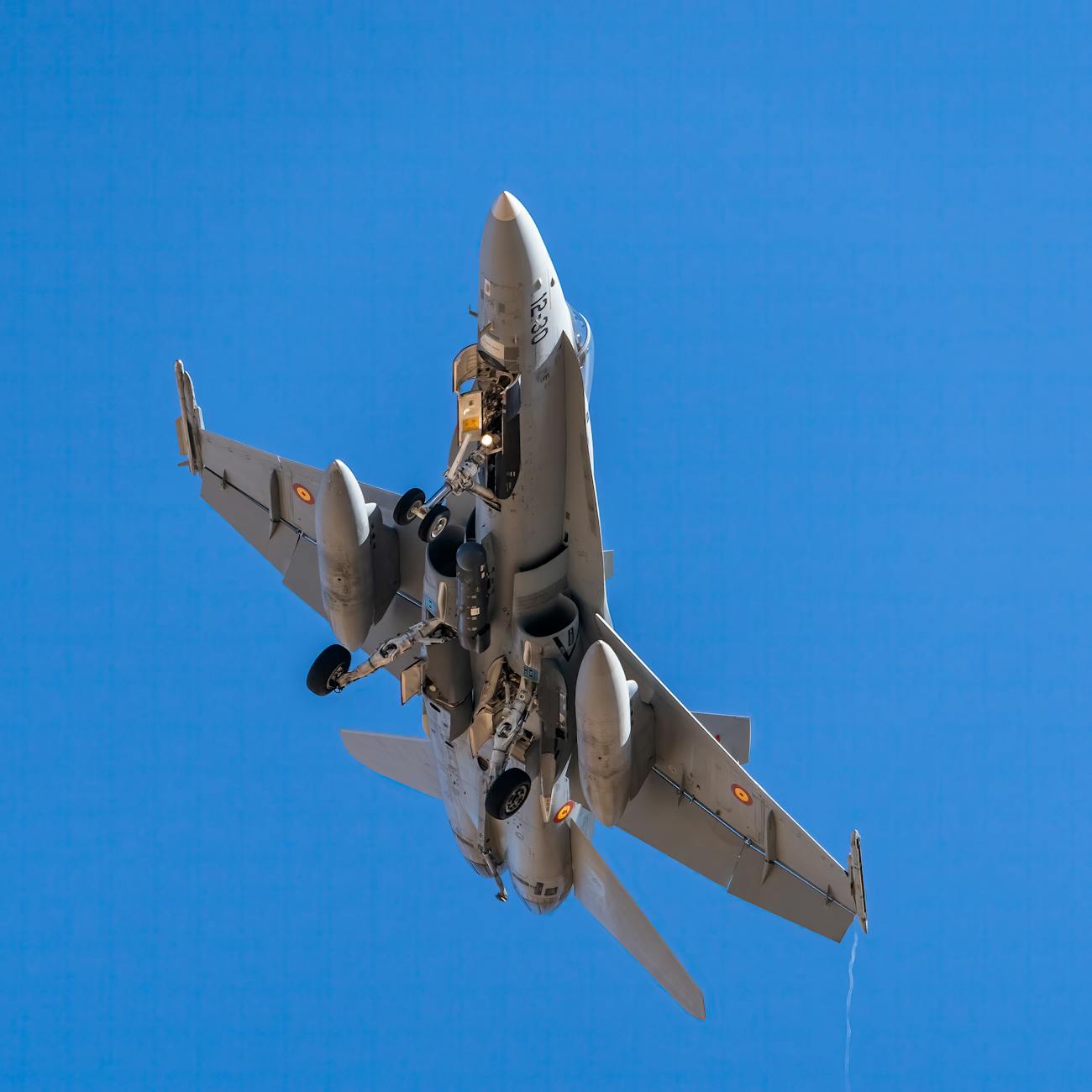
Aerospace engineering is a field that deals with the design, manufacturing, and testing of aircraft, spacecraft, and other airborne systems. This discipline combines the principles of physics, mathematics, and engineering to create efficient and safe flying vehicles. This explanation will cover key terms and vocabulary relevant to the Introduction to Aerospace Engineering course in the Professional Certificate in Aerospace Engineering.
1. Aerodynamics: The study of how gases interact with moving bodies, focusing primarily on aircraft and spacecraft. Aerodynamic forces, such as drag and lift, are critical in the design of any flying vehicle.
Example: The shape of an airplane wing is designed to generate lift, enabling the aircraft to fly.
1. Airfoil: A cross-sectional shape of an object, such as a wing or a rotor blade, designed to generate lift or thrust by interacting with the airflow.
Example: The airfoil shape of a wing allows it to produce lift during flight.
1. Bernoulli's Principle: A fundamental theorem in fluid dynamics that relates the pressure, velocity, and density of a fluid. It explains how an increase in the speed of a fluid is associated with a decrease in pressure.
Example: Bernoulli's Principle is used to understand how lift is generated on an airfoil.
1. Drag: The force that opposes the motion of an object through a fluid (air or water) due to its shape and velocity.
Example: Drag reduces the efficiency of an aircraft, requiring more power to maintain its speed.
1. Lift: The force perpendicular to the direction of motion that helps an aircraft rise and stay in the air.
Example: The lift generated by an airplane wing counteracts the force of gravity, allowing the aircraft to ascend.
1. Thrust: The force that propels a flying vehicle forward. It is typically generated by engines or propellers.
Example: Jet engines produce thrust by expelling hot gases at high velocities.
1. Weight: The force due to gravity acting on an object.
Example: The weight of an aircraft must be counteracted by lift to maintain level flight.
1. Stability: The ability of an aircraft to return to its original trim position after being disturbed.
Example: A well-designed aircraft will have natural stability in pitch, roll, and yaw.
1. Control Surfaces: Movable surfaces on an aircraft used to control its attitude (pitch, roll, and yaw).
Example: The ailerons, elevators, and rudder are control surfaces that help the pilot maneuver the aircraft.
1. Propulsion Systems: Components that generate thrust to propel an aircraft or spacecraft. Examples include jet engines, rocket engines, and propellers.
Example: Modern jet engines use a combination of turbojets and turbofans to provide efficient propulsion.
1. Orbital Mechanics: The study of the motions of artificial satellites and space vehicles under the influence of gravity.
Example: Orbital mechanics is used to design space missions, including satellite deployment and rendezvous maneuvers.
1. Astronautics: The branch of engineering concerned with spacecraft, including their design, propulsion, and control.
Example: Astronautical engineers work on designing and testing spacecraft for various missions, such as lunar landings and interplanetary travel.
1. Atmospheric Science: The interdisciplinary study of the Earth's atmosphere, including its composition, structure, and dynamics.
Example: Atmospheric science is crucial for understanding weather patterns, climate change, and the behavior of aircraft in the atmosphere.
1. Structural Analysis: The process of evaluating the strength and durability of a structure under various loads and conditions.
Example: Structural analysis is essential for ensuring the safety and efficiency of aircraft and spacecraft components.
1. Dynamics: The study of motion and the forces that produce or change motion.
Example: Dynamics is used to analyze the motion of aircraft, spacecraft, and their components.
1. Vibration Analysis: The study of the behavior of systems when subjected to mechanical vibrations.
Example: Vibration analysis is crucial for predicting and mitigating potential failures in aircraft and spacecraft components.
1. Computational Fluid Dynamics (CFD): A branch of fluid mechanics that uses numerical methods and algorithms to solve and analyze fluid flow problems.
Example: CFD is used to simulate and optimize the aerodynamic performance of aircraft and spacecraft.
1. Finite Element Analysis (FEA): A numerical technique for finding approximate solutions to boundary value problems for partial differential equations. It is used to predict how a structure will behave under loads.
Example: FEA is used to analyze and optimize the structural integrity of aircraft and spacecraft components.
1. Systems Engineering: A holistic approach to engineering that focuses on the design, integration, and management of complex systems.
Example: Systems engineering is used in aerospace projects to ensure the coordination and optimization of all subsystems and components.
1. Unmanned Aerial Vehicles (UAVs): Aircraft without human pilots onboard, also known as drones.
Example: UAVs are used in various applications, including surveillance, reconnaissance, and delivery services.
1. Avionics: Electronic systems used on aircraft, artificial satellites, and spacecraft.
Example: Avionics include communication, navigation, display, and control systems.
Understanding these key terms and concepts is essential for success in the Introduction to Aerospace Engineering course and the broader field of aerospace engineering. Familiarity with these concepts will enable learners to analyze, design, and test aircraft and spacecraft components and systems effectively. Applying the principles of aerodynamics, propulsion, orbital mechanics, and structural analysis, learners can tackle real-world challenges in aerospace engineering.
Key takeaways
- This explanation will cover key terms and vocabulary relevant to the Introduction to Aerospace Engineering course in the Professional Certificate in Aerospace Engineering.
- Aerodynamics: The study of how gases interact with moving bodies, focusing primarily on aircraft and spacecraft.
- Example: The shape of an airplane wing is designed to generate lift, enabling the aircraft to fly.
- Airfoil: A cross-sectional shape of an object, such as a wing or a rotor blade, designed to generate lift or thrust by interacting with the airflow.
- Example: The airfoil shape of a wing allows it to produce lift during flight.
- Bernoulli's Principle: A fundamental theorem in fluid dynamics that relates the pressure, velocity, and density of a fluid.
- Example: Bernoulli's Principle is used to understand how lift is generated on an airfoil.