
Drone Telecommunications and Networking
Drone Telecommunications and Networking are crucial components of modern drone technology, enabling advanced functionality such as autonomous flight, real-time data transmission, and collaboration between multiple drones. This explanation w…
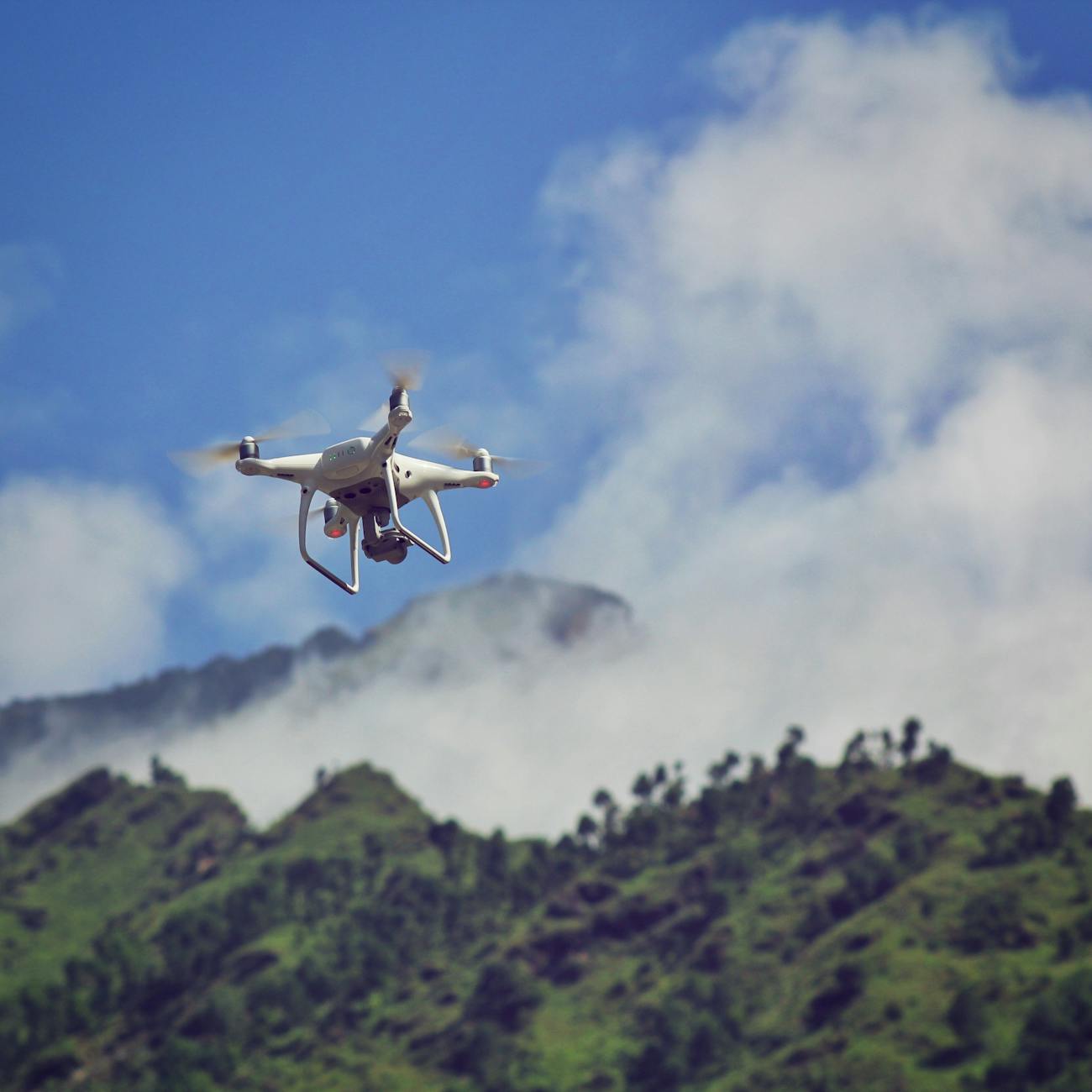
Drone Telecommunications and Networking are crucial components of modern drone technology, enabling advanced functionality such as autonomous flight, real-time data transmission, and collaboration between multiple drones. This explanation will cover key terms and vocabulary related to Drone Telecommunications and Networking in the context of an Undergraduate Certificate in Drone Technology Engineering.
1. Drone Telecommunications: The communication systems used by drones to transmit and receive data, including control commands, video, and sensor data. 2. Networking: The ability of drones to connect and communicate with each other, forming a network of interconnected devices. 3. Control Command Transmission: The process of sending control commands from a ground station or remote control to a drone. This typically involves a two-way communication link, allowing the ground station to receive feedback from the drone. 4. Real-Time Data Transmission: The ability to transmit data from a drone to a ground station or the cloud in real-time, enabling real-time monitoring and analysis. 5. Telemetry: The automatic measurement and wireless transmission of data from a drone to a ground station or the cloud. This can include data such as GPS location, altitude, speed, and battery level. 6. Data Link: The communication channel used to transmit data between a drone and a ground station or the cloud. This can be a wireless link such as Wi-Fi, cellular, or satellite. 7. Line-of-Sight (LOS) Communication: A communication link between a drone and a ground station that is unobstructed by terrain or other objects. 8. Beyond Line-of-Sight (BLOS) Communication: A communication link between a drone and a ground station that is obstructed by terrain or other objects, requiring the use of a data link with a longer range. 9. Command and Control (C2) System: The system used to send control commands to a drone and receive feedback, typically consisting of a ground station, remote control, and communication link. 10. Autonomous Flight: The ability of a drone to fly without human intervention, relying on onboard sensors, algorithms, and communication systems. 11. Swarm Intelligence: The ability of a group of drones to work together to achieve a common goal, using communication and collaboration between the drones. 12. Command and Control Network: A network of interconnected drones and ground stations, enabling real-time communication and collaboration between the drones. 13. Wireless Mesh Network: A type of network topology where each node is connected to multiple other nodes, enabling data to be transmitted through the network using multiple paths. 14. Cellular Network: A type of network used for mobile communication, consisting of a network of cell sites that provide coverage over a large area. 15. Satellite Communication: The use of satellites to provide communication links between drones and ground stations, enabling BLOS communication over long distances. 16. Encryption: The process of converting plaintext data into ciphertext, preventing unauthorized access to the data during transmission. 17. Data Security: The protection of data from unauthorized access, use, disclosure, disruption, modification, or destruction. 18. Data Integrity: The assurance that data is accurate, complete, and consistent throughout its lifecycle. 19. Data Privacy: The protection of personal data from unauthorized access, use, or disclosure. 20. Regulatory Compliance: The adherence to laws, regulations, and industry standards related to drone telecommunications and networking.
Examples:
* A drone equipped with a wireless camera streaming video to a ground station in real-time is an example of real-time data transmission. * A group of drones working together to survey a large area is an example of swarm intelligence. * A drone flying autonomously using onboard sensors and algorithms is an example of autonomous flight. * A network of drones and ground stations communicating using Wi-Fi is an example of a wireless mesh network. * A drone communicating with a ground station using a cellular network is an example of cellular network communication. * A drone communicating with a ground station using a satellite link is an example of satellite communication. * A drone using encryption to protect control commands during transmission is an example of data security. * A drone ensuring that sensor data is accurate and consistent throughout its lifecycle is an example of data integrity. * A drone protecting personal data from unauthorized access or use is an example of data privacy. * A drone operator ensuring compliance with FAA regulations related to drone telecommunications and networking is an example of regulatory compliance.
Practical Applications:
* Real-time data transmission can be used for remote monitoring and surveillance, enabling operators to make informed decisions quickly. * Swarm intelligence can be used for search and rescue missions, enabling a group of drones to cover a large area more efficiently. * Autonomous flight can be used for delivery or transportation, enabling drones to operate without human intervention. * Wireless mesh networks can be used for disaster response, enabling communication and collaboration between drones and ground stations in areas with limited infrastructure. * Cellular network communication can be used for long-range communication, enabling BLOS communication over large distances. * Satellite communication can be used for remote communication, enabling communication and collaboration between drones and ground stations in areas with no infrastructure. * Data security can be used to protect control commands and sensitive data from unauthorized access or use. * Data integrity can be used to ensure that sensor data is accurate and consistent, reducing the risk of errors or accidents. * Data privacy can be used to protect personal data from unauthorized access or use, ensuring compliance with regulations. * Regulatory compliance can be used to ensure that drone telecommunications and networking are safe, secure, and legal, reducing the risk of accidents or legal issues.
Challenges:
* Real-time data transmission can be challenging due to limited bandwidth, latency, and interference. * Swarm intelligence can be challenging due to the complexity of coordinating multiple drones and ensuring consistent communication. * Autonomous flight can be challenging due to the complexity of onboard algorithms and sensor data processing. * Wireless mesh networks can be challenging due to the complexity of network topology and interference. * Cellular network communication can be challenging due to limited coverage and interference. * Satellite communication can be challenging due to limited bandwidth, latency, and interference. * Data security can be challenging due to the complexity of encryption and key management. * Data integrity can be challenging due to the complexity of data validation and verification. * Data privacy can be challenging due to the complexity of data protection and compliance. * Regulatory compliance can be challenging due to the complexity of regulations and industry standards.
In conclusion, Drone Telecommunications and Networking are critical components of modern drone technology, enabling advanced functionality such as autonomous flight, real-time data transmission, and collaboration between multiple drones. Understanding the key terms and vocabulary related to Drone Telecommunications and Networking is essential for anyone pursuing a career in Drone Technology Engineering, enabling them to design, develop, and operate drones safely, securely, and legally. By addressing the challenges and opportunities related to Drone Telecommunications and Networking, drone technology can continue to evolve and improve, unlocking new possibilities for remote monitoring, surveillance, delivery, transportation, and disaster response.
Key takeaways
- Drone Telecommunications and Networking are crucial components of modern drone technology, enabling advanced functionality such as autonomous flight, real-time data transmission, and collaboration between multiple drones.
- Beyond Line-of-Sight (BLOS) Communication: A communication link between a drone and a ground station that is obstructed by terrain or other objects, requiring the use of a data link with a longer range.
- * A drone operator ensuring compliance with FAA regulations related to drone telecommunications and networking is an example of regulatory compliance.
- * Wireless mesh networks can be used for disaster response, enabling communication and collaboration between drones and ground stations in areas with limited infrastructure.
- * Swarm intelligence can be challenging due to the complexity of coordinating multiple drones and ensuring consistent communication.
- In conclusion, Drone Telecommunications and Networking are critical components of modern drone technology, enabling advanced functionality such as autonomous flight, real-time data transmission, and collaboration between multiple drones.