
Foundations Of AI In Supply Chain Management
Artificial Intelligence refers to the broader field of creating machines that can perform tasks that normally require human intelligence. In supply chain management, AI enables the automation of complex decision‑making processes, such as ro…
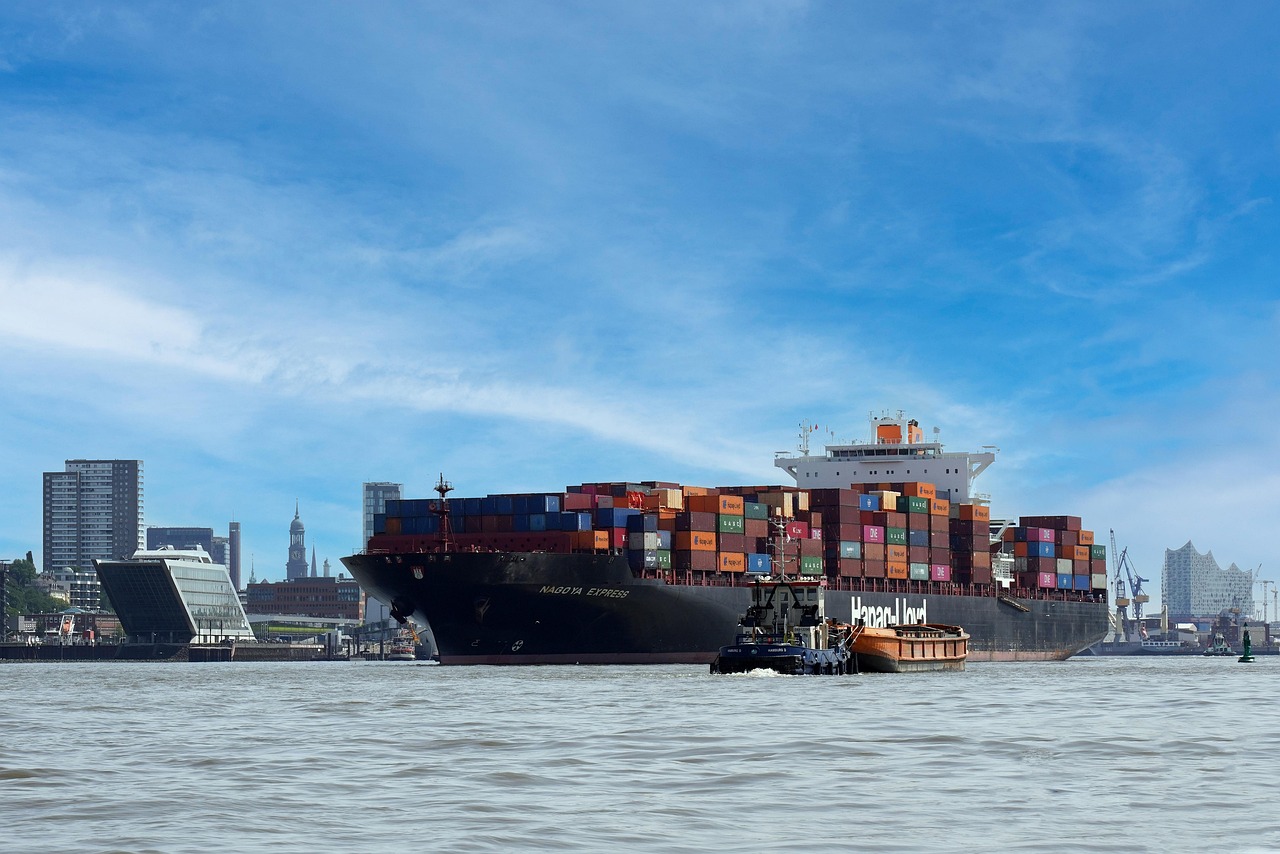
Artificial Intelligence refers to the broader field of creating machines that can perform tasks that normally require human intelligence. In supply chain management, AI enables the automation of complex decision‑making processes, such as route planning, demand forecasting, and inventory optimization. By leveraging large volumes of data from sensors, transactional systems, and external sources, AI systems can detect patterns that are invisible to traditional analytical tools. For example, an AI‑driven platform might analyze weather forecasts, social media sentiment, and historical sales data to predict a sudden surge in demand for winter apparel, allowing the retailer to adjust replenishment orders before stockouts occur. The practical benefit is a more responsive, resilient supply chain that can adapt to disruptions in near real‑time.
Machine Learning is a subset of AI that focuses on algorithms that improve automatically through experience. In the supply chain context, machine learning models learn from historical transaction records to predict future outcomes. A common application is supervised learning, where a model is trained on labeled data—such as past demand quantities paired with corresponding features like price, promotion, and seasonality—to forecast future demand. When the model encounters new data, it can generate predictions with a quantified confidence interval, supporting inventory planners in setting safety stock levels. The key advantage of machine learning over static statistical methods is its ability to capture nonlinear relationships and interactions among hundreds of variables without the need for explicit mathematical formulation.
Deep Learning extends machine learning by employing multi‑layered neural networks that can automatically extract high‑level features from raw data. In supply chain operations, deep learning excels in processing unstructured data sources such as images, video, and text. For instance, computer vision models built with convolutional neural networks can inspect product packaging on a conveyor belt, detecting defects or mislabels with higher accuracy than human inspectors. Similarly, natural language processing models can parse customer emails to automatically classify complaints, route them to the appropriate service team, and trigger corrective actions in the logistics network. The depth of these models enables them to learn complex patterns, but they also require substantial computational resources and large labeled datasets for effective training.
Neural Network is the fundamental architecture of deep learning, composed of interconnected layers of artificial neurons. Each neuron receives inputs, applies a weighted sum, adds a bias term, and passes the result through an activation function. In a supply chain use case, a feed‑forward neural network might be employed to predict lead times based on features such as carrier performance, customs clearance durations, and port congestion indices. By adjusting the weights during training, the network learns to associate particular input patterns with longer or shorter lead times, allowing logistics managers to proactively select alternative carriers when the model forecasts a high‑risk scenario.
Supervised Learning involves training a model on a dataset where the desired output is known. In demand planning, the target variable is typically the quantity of a product that will be sold in a future period. Features may include historical sales, price elasticity, promotional calendars, and macro‑economic indicators. The model learns the mapping from features to demand, and once validated, can be used to generate forecasts for upcoming periods. A popular supervised technique is gradient‑boosted decision trees, which combine many weak learners into a strong predictor and often outperform linear regression in handling heterogeneous data.
Unsupervised Learning deals with data that lacks explicit labels. In supply chain analytics, clustering algorithms such as k‑means or hierarchical clustering can group suppliers based on performance metrics like on‑time delivery, defect rates, and cost. These clusters help procurement teams identify strategic partners, negotiate better terms, and design tiered risk‑mitigation strategies. Another unsupervised approach is anomaly detection, where models learn the normal behavior of sensor streams from transportation assets and flag deviations that may indicate equipment failure or security breaches.
Reinforcement Learning is a paradigm where an agent learns to make sequential decisions by interacting with an environment and receiving rewards or penalties. In warehouse automation, a reinforcement learning agent can be tasked with optimizing the picking route of autonomous mobile robots. The agent receives a negative reward for each additional travel step and a positive reward for completing the pick list within a target time window. Over many episodes, the agent discovers policies that minimize travel distance while respecting congestion constraints, leading to higher throughput and lower energy consumption. Reinforcement learning also finds application in dynamic pricing, where the agent adjusts prices in response to real‑time demand signals to maximize revenue while maintaining service level agreements.
Predictive Analytics encompasses statistical and machine learning techniques used to forecast future events based on historical data. In the supply chain, predictive analytics is most commonly applied to demand forecasting, inventory turnover analysis, and risk assessment. A typical workflow starts with data extraction from ERP and WMS systems, followed by data cleaning, feature engineering, model training, and validation. The resulting forecasts are then integrated into planning tools, where they drive replenishment orders, production scheduling, and capacity planning. The predictive approach reduces forecast error, which directly translates into lower safety stock requirements and decreased inventory holding costs.
Prescriptive Analytics goes a step beyond prediction by recommending optimal actions. While predictive models answer “what will happen,” prescriptive models answer “what should we do.” In transportation management, a prescriptive model may suggest the optimal mix of shipping modes—air, sea, or rail—based on cost, delivery window, carbon footprint, and carrier reliability. The model solves a constrained optimization problem that balances these objectives, producing a shipment plan that minimizes total logistics cost while meeting service level agreements. Integration with execution platforms enables automatic tendering of shipments to carriers, reducing manual intervention and accelerating order fulfillment.
Optimization refers to the mathematical process of finding the best solution from a set of feasible alternatives. In supply chain contexts, linear programming, mixed‑integer programming, and heuristic algorithms are frequently employed. A classic example is the transportation problem, where a company must allocate production from multiple factories to meet demand at various distribution centers at minimum cost. By defining decision variables (e.G., Quantity shipped from each factory to each center), constraints (e.G., Capacity limits, demand fulfillment), and an objective function (e.G., Total shipping cost), the optimizer identifies the cost‑effective shipping plan. Modern AI‑enhanced solvers incorporate machine learning to predict which constraints are most binding, thereby accelerating convergence on large‑scale problems.
Demand Forecasting is the practice of estimating future product demand using historical sales data and external factors. Accurate forecasts enable companies to align production, procurement, and distribution activities, reducing both stockouts and excess inventory. Traditional methods such as moving averages and exponential smoothing are now complemented by sophisticated AI models that can ingest high‑dimensional inputs, including promotional calendars, competitor pricing, and social media trends. For example, a retailer may use a recurrent neural network to capture temporal dependencies in weekly sales, while simultaneously feeding in macro‑economic indicators to adjust forecasts during recessionary periods. The resulting forecast accuracy is often measured by mean absolute percentage error (MAPE) or root mean square error (RMSE).
Inventory Management involves controlling the quantity, location, and timing of goods held within the supply chain. AI‑driven inventory management systems continuously monitor stock levels, demand signals, and lead‑time variability to recommend replenishment actions. A common technique is the calculation of reorder point (ROP) and order quantity using probabilistic models that account for demand uncertainty and supplier lead‑time distribution. AI can dynamically adjust these parameters as market conditions evolve, ensuring that safety stock is neither excessive nor insufficient. Moreover, AI can identify slow‑moving SKUs, suggest markdown strategies, or recommend disposition actions such as liquidation or donation.
SKU stands for Stock Keeping Unit, a unique identifier for each product variant. Managing SKUs at scale poses significant data challenges, as each SKU may have distinct demand patterns, lead times, and profitability profiles. AI tools can cluster SKUs with similar characteristics, enabling aggregated forecasting and shared replenishment policies. For instance, a fast‑moving consumer goods (FMCG) company may group low‑margin SKUs into a “high‑volume” cluster, applying a simplified forecasting model that reduces computational overhead while still capturing overall demand trends.
Lead Time is the elapsed time between the initiation of an order and its receipt. Accurate lead‑time estimation is crucial for setting appropriate safety stock levels. AI models can predict lead‑time variability by analyzing historical shipment data, carrier performance metrics, customs clearance times, and geopolitical risk indicators. In a scenario where a supplier’s lead time historically ranged from 7 to 14 days, an AI model might detect a pattern of longer lead times during peak holiday seasons, prompting the planner to increase safety stock or source from an alternate supplier. Real‑time lead‑time predictions also support dynamic order routing decisions in multi‑source environments.
Safety Stock is the extra inventory kept to mitigate the risk of demand surges or supply delays. Traditional safety stock calculations rely on a fixed service level and standard deviation of demand and lead time. AI‑enhanced safety stock models incorporate additional variables such as market volatility indices, supplier risk scores, and transportation network congestion. By continuously updating the probability distribution of demand and supply uncertainty, these models can suggest adaptive safety stock levels that balance service quality against holding cost. For example, during a pandemic‑induced supply shock, the model may recommend a temporary increase in safety stock for critical components, while gradually reducing it as supply chain stability returns.
Economic Order Quantity (EOQ) is a classic formula that determines the optimal order size minimizing the sum of ordering and holding costs. While EOQ assumes constant demand and lead time, AI can extend the concept by calculating a dynamic EOQ that reacts to fluctuating demand forecasts and variable supplier costs. In a digital twin of the supply chain, the AI engine runs scenario simulations that adjust EOQ values in response to price changes, capacity constraints, and demand spikes, delivering a more realistic ordering policy.
Digital Twin is a virtual replica of a physical system that mirrors its behavior in real time. In supply chain management, a digital twin can represent a warehouse layout, a transportation network, or an entire end‑to‑end logistics ecosystem. By feeding live sensor data, transaction records, and external risk indicators into the twin, AI algorithms can simulate “what‑if” scenarios, predict bottlenecks, and evaluate mitigation strategies before they are implemented on the shop floor. For example, a digital twin of a cross‑dock facility can assess the impact of a new loading dock configuration on throughput, allowing managers to optimize the layout virtually and reduce costly trial‑and‑error in the real world.
Internet of Things (IoT) refers to a network of physical devices equipped with sensors, actuators, and connectivity that generate continuous streams of data. In logistics, IoT devices track the location, temperature, humidity, and vibration of pallets, containers, and individual assets. AI algorithms ingest this high‑frequency data to detect anomalies, predict equipment failures, and optimize routing. A practical illustration is the use of IoT‑enabled temperature sensors in a cold‑chain supply network; AI models can forecast the likelihood of temperature excursions based on ambient conditions and carrier performance, triggering proactive alerts to reroute shipments before product spoilage occurs.
Big Data describes the massive volume, velocity, and variety of data generated across the supply chain. Managing big data requires scalable storage solutions such as data lakes, as well as processing frameworks capable of handling batch and streaming workloads. AI leverages big data to train models that capture complex interdependencies, such as the influence of global trade policies on commodity prices. By integrating structured ERP data with unstructured sources like news articles and social media feeds, AI can generate richer insights that drive strategic decisions, such as sourcing alternative raw‑material suppliers when geopolitical risk escalates.
Data Lake is a centralized repository that stores raw data in its native format, enabling flexible analytics and machine learning. In a supply chain setting, a data lake may ingest transactional records, sensor streams, third‑party market data, and external risk feeds. AI pipelines pull relevant subsets from the lake for feature engineering, model training, and inference. The lake architecture supports both batch processing for historical trend analysis and real‑time streaming for operational monitoring. Proper governance, metadata tagging, and access controls are essential to ensure data quality and compliance with privacy regulations.
Data Warehouse is a structured repository optimized for query performance and reporting. While data warehouses traditionally store curated, cleaned data for business intelligence, AI initiatives often draw from both warehouse and lake sources. For example, a demand forecasting model may retrieve historical sales from the warehouse, while augmenting it with real‑time promotional data from the lake. The combination provides a comprehensive view that improves forecast accuracy. Maintaining synchronization between warehouse and lake environments is a key challenge, requiring robust ETL pipelines and data lineage tracking.
Cloud Computing offers on‑demand compute, storage, and networking resources that scale elastically to meet AI workload requirements. Supply chain AI projects frequently leverage cloud platforms for model training, as the massive parallel processing power of GPUs and TPUs accelerates deep learning experiments. Additionally, cloud‑based AI services provide pre‑built APIs for vision, language, and anomaly detection, reducing development time. A logistics provider might deploy a serverless function that ingests IoT telemetry, runs an inference model to predict delivery delays, and writes the results back to a cloud database, all without managing underlying infrastructure.
Edge Computing brings computation closer to the data source, reducing latency and bandwidth consumption. In a warehouse, edge devices can run lightweight AI models on the robot controller to make immediate decisions about path planning or obstacle avoidance. By processing data locally, the system avoids sending raw sensor streams to the cloud, preserving network bandwidth for higher‑level analytics. Edge AI also enhances data privacy, as sensitive information can be filtered or aggregated before transmission. A practical scenario involves edge‑deployed computer vision that counts pallets entering a dock, updating inventory counts in real time without relying on a central server.
Natural Language Processing (NLP) enables computers to understand, interpret, and generate human language. Within supply chain management, NLP can automate the extraction of key information from unstructured documents such as purchase orders, invoices, and shipping notices. An AI‑powered OCR pipeline combined with NLP can read a scanned bill of lading, identify the consignee, product description, and weight, and automatically populate the transportation management system. Additionally, chatbots powered by NLP can assist suppliers in querying order status, reducing manual workload for customer service teams.
Computer Vision is the field of AI that enables machines to interpret visual information from images or video. In warehousing, computer vision systems can monitor pallet stacking, detect misplacements, and verify label compliance. By training convolutional neural networks on annotated image datasets, the system learns to differentiate between correctly and incorrectly loaded containers. Real‑time alerts can be sent to operators, preventing downstream errors and reducing rework. In inbound logistics, computer vision can read container seals and verify integrity, enhancing security and compliance.
Robotic Process Automation (RPA) automates repetitive, rule‑based tasks by mimicking human interactions with user interfaces. When combined with AI, RPA can handle more complex processes that involve decision‑making. For instance, an RPA bot may extract order details from an email, invoke an NLP model to classify the request, and then trigger a purchase order creation in the ERP system. By integrating AI‑enhanced exception handling, the bot can route ambiguous cases to a human analyst, while automatically processing routine transactions. This hybrid approach drives efficiency gains and frees staff to focus on higher‑value activities.
Autonomous Vehicles include driverless trucks, drones, and robotic delivery units that operate without human intervention. AI algorithms for perception, planning, and control enable these vehicles to navigate complex environments, obey traffic regulations, and adapt to dynamic obstacles. In supply chain logistics, autonomous trucks can transport goods over long distances, reducing labor costs and improving safety. Drones can perform last‑mile deliveries in congested urban areas, delivering lightweight parcels within minutes. The deployment of autonomous vehicles requires integration with fleet management systems, real‑time traffic data, and regulatory compliance frameworks.
Blockchain is a distributed ledger technology that provides immutable, time‑stamped records of transactions. In supply chain networks, blockchain can establish a single source of truth for provenance, ensuring traceability of raw materials, compliance with regulatory standards, and authenticity of high‑value goods. Smart contracts—self‑executing code on the blockchain—can automate payment settlements once predefined conditions are met, such as delivery confirmation or quality inspection results. AI can enhance blockchain by analyzing transaction patterns to detect fraud, predict supply chain disruptions, and recommend risk mitigation strategies.
Smart Contract is a programmable agreement that automatically enforces terms when conditions are satisfied. Within a supply chain, a smart contract may release payment to a supplier once a sensor confirms that a shipment has arrived at the destination temperature range and the customs clearance is completed. AI models can feed risk scores into the contract, adjusting escrow release thresholds based on the probability of delay or damage. This dynamic interaction creates a more resilient and transparent trading environment.
SCOR Model (Supply Chain Operations Reference) is a framework that standardizes processes across planning, sourcing, making, delivering, and returning. AI can be embedded within each SCOR process to enhance performance measurement and decision support. For example, in the “Plan” phase, predictive analytics can generate demand forecasts; in “Source,” AI‑driven supplier risk scores inform sourcing decisions; in “Make,” reinforcement learning can optimize production schedules; in “Deliver,” prescriptive analytics can recommend carrier selection; and in “Return,” computer vision can automate reverse‑logistics inspection. By aligning AI initiatives with the SCOR taxonomy, organizations achieve consistent, cross‑functional improvements.
Bullwhip Effect describes the amplification of demand variability as orders move upstream in the supply chain. Small fluctuations in retail sales can translate into large swings in supplier production plans, leading to excess inventory and higher costs. AI helps mitigate the bullwhip effect by providing more accurate, real‑time demand signals and by sharing forecasts across partners. Collaborative forecasting platforms powered by machine learning enable retailers, distributors, and manufacturers to synchronize their plans, reducing the need for safety stock and smoothing production schedules.
Order Fulfillment is the process of receiving, processing, and delivering customer orders. AI improves fulfillment efficiency through automated order routing, dynamic slotting, and pick‑path optimization. For instance, a reinforcement learning algorithm can assign orders to the most suitable warehouse based on inventory availability, proximity to the customer, and current workload. Within the warehouse, AI‑driven pick‑path generators determine the optimal sequence for order pickers, minimizing travel distance and reducing order cycle time. Real‑time monitoring of fulfillment performance enables rapid intervention when bottlenecks arise.
Last Mile refers to the final segment of the delivery journey from a distribution hub to the end consumer. It is often the most costly and least predictable portion of the logistics network. AI can optimize last‑mile routing by incorporating traffic data, delivery windows, vehicle capacity, and driver availability. Dynamic routing algorithms reassign deliveries on the fly as conditions change, improving on‑time delivery rates. In urban environments, AI can coordinate fleets of electric vans, bicycles, and autonomous drones to achieve cost‑effective, low‑emission deliveries.
Reverse Logistics involves the flow of products from the customer back to the manufacturer or a third‑party processor for returns, recycling, or disposal. AI assists in reverse logistics by predicting return rates, classifying returned items, and recommending disposition actions. Computer vision can assess the condition of returned goods, while natural language processing can extract reasons for return from customer messages. Predictive models can forecast the volume of returns during promotional periods, allowing firms to allocate sufficient capacity in reverse‑logistics facilities and negotiate contracts with specialized service providers.
Procurement is the acquisition of goods and services needed to support operations. AI transforms procurement by automating spend analysis, supplier discovery, and contract compliance monitoring. Machine learning models can cluster spend categories, identify maverick purchases, and suggest consolidation opportunities. AI‑driven market intelligence tools scrape supplier websites and news feeds to surface emerging suppliers that meet cost, quality, and sustainability criteria. By integrating AI into the sourcing workflow, procurement teams achieve greater strategic focus and cost savings.
Sourcing is the process of selecting suppliers and negotiating terms. AI can evaluate supplier performance across multiple dimensions—price, lead time, quality, sustainability—and calculate a composite risk score. Decision models then rank suppliers based on the organization’s strategic priorities. Scenario analysis powered by AI enables procurement professionals to simulate the impact of supplier disruptions, such as a natural disaster affecting a primary source, and to develop contingency plans that include alternative sourcing options.
Supplier Relationship Management (SRM) focuses on maintaining productive collaborations with suppliers. AI enhances SRM by providing real‑time performance dashboards, sentiment analysis of communications, and predictive alerts for potential contract breaches. For example, an AI model may detect early signs of supplier strain by monitoring financial news, payment patterns, and production capacity indicators. Proactive outreach can then be initiated to renegotiate terms or to source backup suppliers, reducing the likelihood of supply interruptions.
Model Training is the phase where an AI algorithm learns from data by adjusting its internal parameters to minimize prediction error. In supply chain applications, model training may involve millions of historical transactions, sensor readings, and external risk factors. Training requires careful selection of hyperparameters—learning rate, regularization strength, batch size—to balance convergence speed and model generalization. Overfitting, where the model memorizes training data, leads to poor performance on unseen data, while underfitting results in inadequate capture of underlying patterns. Validation techniques such as cross‑validation help assess model robustness before deployment.
Inference is the process of applying a trained model to new data to generate predictions or classifications. In operational settings, inference must be fast and reliable, often occurring in real time. For instance, a demand forecasting model may be invoked every hour to update replenishment recommendations as new sales data arrives. Edge inference enables low‑latency decision making on devices with limited compute, while cloud inference can handle large batch jobs. Monitoring inference performance—latency, accuracy, and resource utilization—is essential to maintain service level agreements.
Feature Engineering involves transforming raw data into meaningful inputs for machine learning models. In supply chain contexts, features may include lagged demand values, moving averages, promotional flags, holiday indicators, and supplier reliability scores. Domain expertise guides the creation of derived features such as “days of inventory on hand” or “price elasticity index.” Automated feature engineering tools, like deep feature synthesis, can generate large numbers of candidate features, which are then evaluated for predictive power. High‑quality features are critical for model accuracy and interpretability.
Hyperparameter Tuning refers to the optimization of algorithm parameters that are not learned during model training, such as the number of trees in a random forest or the depth of a neural network. Grid search, random search, and Bayesian optimization are common techniques for exploring the hyperparameter space. In supply chain AI projects, hyperparameter tuning can significantly improve forecast accuracy, but it also increases computational cost. Efficient tuning strategies, such as early stopping and multi‑fidelity optimization, help balance performance gains with resource constraints.
Overfitting occurs when a model captures noise in the training data, leading to poor generalization on new data. Overfitting is a common risk when models are overly complex relative to the amount of available data. Techniques to mitigate overfitting include regularization (L1, L2), dropout in neural networks, and pruning of decision trees. In supply chain forecasting, an overfitted model may predict a demand spike that never materializes, causing unnecessary inventory buildup and increased holding costs.
Underfitting describes a model that is too simple to capture underlying patterns, resulting in high bias and low accuracy. Underfitting can be addressed by increasing model complexity, adding more relevant features, or reducing regularization strength. For example, a linear regression model may underfit a demand series with seasonal peaks, whereas a gradient‑boosted tree can capture the nonlinear seasonality and improve forecast performance.
Bias in AI refers to systematic errors that cause predictions to deviate from true values in a particular direction. Bias can arise from data sampling, feature selection, or model assumptions. In supply chain applications, bias may manifest as consistently underestimating demand for new product categories because historical data is scarce. Identifying bias requires careful analysis of residuals across product lines, regions, and time periods. Mitigation strategies include augmenting training data with synthetic samples, rebalancing class distributions, and incorporating domain knowledge.
Variance measures the sensitivity of a model’s predictions to fluctuations in the training data. High variance models are prone to overfitting, as they adapt too closely to random noise. Reducing variance involves simplifying the model, increasing the amount of training data, or applying ensemble methods that average predictions across multiple learners. In practice, a supply chain forecasting ensemble that combines ARIMA, random forests, and neural networks can achieve lower variance and more stable performance.
Explainability is the ability to understand and articulate how an AI model arrives at a particular decision. In regulated industries, explainability is essential for compliance and stakeholder trust. Techniques such as SHAP values, LIME, and feature importance plots provide insights into which variables drive predictions. For a demand forecasting model, explainability can reveal that a sudden increase in promotional spend and a regional holiday are the primary contributors to a forecasted demand surge. This transparency enables planners to validate model outputs and to communicate rationale to senior management.
Transparency denotes openness about the data, algorithms, and processes used in AI systems. Transparent AI pipelines document data provenance, preprocessing steps, model versioning, and performance metrics. In supply chain contexts, transparency supports auditability, especially when AI influences critical decisions such as supplier selection or inventory allocation. Maintaining transparent documentation helps organizations demonstrate compliance with internal policies and external regulations, such as data protection laws.
Ethical AI encompasses principles and practices that ensure AI systems are fair, accountable, and respect privacy. In supply chain management, ethical considerations include avoiding discrimination in supplier evaluation, protecting employee data collected from wearable devices, and ensuring that automated decisions do not inadvertently disadvantage certain customer segments. Ethical AI frameworks prescribe governance structures, bias monitoring, and stakeholder engagement to align AI deployments with corporate values and societal expectations.
Data Governance is the set of policies, procedures, and standards that manage data quality, security, and accessibility. Effective data governance ensures that AI models receive reliable, consistent inputs. Key components include data ownership definitions, data lineage tracking, and access controls. In a global supply chain, governance must address cross‑border data transfer regulations, such as GDPR, and establish protocols for data sharing with partners. A robust governance program reduces the risk of model drift caused by inaccurate or outdated data.
Data Quality refers to the accuracy, completeness, timeliness, and consistency of data used for AI analytics. Poor data quality can degrade model performance, leading to erroneous forecasts and suboptimal decisions. Common data quality issues in supply chains include missing transaction timestamps, inconsistent product codes, and duplicate supplier records. Data profiling tools can identify anomalies, while cleansing routines—standardization, deduplication, imputation—restore data integrity. Continuous data quality monitoring is essential for sustaining AI efficacy.
Data Integration involves combining data from disparate sources—ERP, WMS, TMS, IoT devices, external market feeds—into a unified view. Integration challenges include differing data formats, varying update frequencies, and semantic inconsistencies. Middleware platforms and APIs facilitate real‑time data exchange, while master data management (MDM) solutions maintain consistent definitions for entities such as products, locations, and suppliers. Seamless data integration enables AI models to ingest comprehensive datasets, improving predictive accuracy and operational relevance.
Data Preprocessing prepares raw data for model consumption by handling missing values, scaling numeric features, encoding categorical variables, and removing outliers. In supply chain AI, preprocessing may involve aggregating transaction data to weekly or monthly levels, normalizing demand by product size, and creating lag features that capture historical trends. Automated pipelines, often orchestrated with workflow tools, ensure that preprocessing steps are reproducible and can be re‑executed as new data arrives.
Real‑time Analytics delivers insights as data streams in, enabling immediate response to emerging events. In logistics, real‑time analytics can monitor fleet location, traffic congestion, and weather conditions to dynamically reroute deliveries. AI models deployed in streaming architectures ingest data from Kafka or MQTT topics, perform inference on the fly, and output actionable alerts to operators. The latency between data capture and decision execution is critical; edge computing and low‑latency inference frameworks help achieve sub‑second response times.
Streaming Data is continuous, time‑ordered data generated by sensors, devices, and applications. In supply chain operations, streaming data sources include RFID tag reads, GPS coordinates, and order status updates. AI pipelines built on streaming platforms process this data in micro‑batches or event‑by‑event, applying models to detect anomalies, predict arrival times, and trigger automated workflows. Managing streaming data requires robust fault tolerance, stateful processing capabilities, and scalable storage for historical replay.
Batch Processing handles large volumes of data in discrete intervals, typically used for offline model training and periodic reporting. While batch jobs are less time‑sensitive than streaming analytics, they enable comprehensive analysis of historical trends, such as yearly demand patterns or long‑term supplier performance. In a supply chain AI project, batch processing may be scheduled nightly to retrain forecasting models with the latest sales data, ensuring that the models remain up‑to‑date without impacting real‑time operational workloads.
Model Deployment is the transition of a trained AI model into a production environment where it can serve real‑world predictions. Deployment strategies include containerization with Docker, orchestration using Kubernetes, and serverless functions for on‑demand inference. In supply chain systems, model deployment must integrate with existing ERP, WMS, or TMS platforms via APIs or messaging queues. Monitoring tools track model health, latency, and drift, allowing data scientists to trigger retraining cycles when performance degrades.
Model Monitoring continuously observes the behavior of AI models in production. Key metrics include prediction accuracy, data distribution shifts, and resource utilization. In a demand forecasting scenario, model monitoring may detect a sudden increase in forecast error after a major product launch, indicating that the model’s assumptions no longer hold. Automated alerts prompt data scientists to investigate, possibly incorporating new features or retraining the model with post‑launch data. Effective monitoring safeguards against silent failures that could disrupt supply chain operations.
Model Drift occurs when the statistical properties of input data change over time, causing the model’s performance to deteriorate. Drift is common in supply chains due to seasonality, market disruptions, or changes in supplier behavior. Detecting drift involves comparing current input feature distributions to those observed during training, using statistical tests such as Kolmogorov‑Smirnov or population stability indices. When drift is identified, a retraining pipeline can be triggered to update the model with recent data, restoring predictive quality.
Data Privacy concerns the protection of personally identifiable information (PII) and confidential business data. In supply chain AI, privacy considerations arise when processing employee location data from wearables, customer purchase histories, or supplier contract details. Techniques such as data anonymization, differential privacy, and secure multi‑party computation enable analytics while preserving confidentiality. Compliance with regulations like GDPR and CCPA mandates strict controls over data access, retention, and consent management.
Bias Mitigation strategies aim to reduce unfair treatment of certain groups or entities in AI outcomes. In procurement, bias mitigation may involve de‑identifying supplier names during model training to prevent historical favoritism from influencing supplier ranking scores. Post‑processing techniques, such as equalized odds or demographic parity adjustments, can also be applied to model outputs to ensure equitable treatment across supplier categories. Continuous bias audits are essential to maintain fairness as the data landscape evolves.
Scalability describes the ability of an AI solution to handle increasing data volumes, computational load, and user concurrency without degradation of performance. Cloud-native architectures, auto‑scaling groups, and distributed training frameworks (e.G., Horovod) support scalability for large‑scale supply chain models that ingest terabytes of sensor data and serve thousands of inference requests per second. Designing for scalability from the outset prevents costly re‑architectures as the organization expands its AI footprint.
Interpretability is the degree to which a human can understand the internal mechanics of an AI model. While deep neural networks often achieve high accuracy, their opacity can hinder adoption in risk‑averse supply chain functions. Interpretable models—such as decision trees, rule‑based systems, or linear models—provide clear decision logic that stakeholders can validate. Hybrid approaches combine interpretable components with black‑box models, delivering both performance and insight. Providing interpretable explanations for AI recommendations builds trust and facilitates regulatory compliance.
Resilience refers to the capacity of a supply chain to absorb shocks and recover quickly. AI contributes to resilience by forecasting potential disruptions, simulating alternative network designs, and recommending contingency actions. For example, a graph‑based AI model can evaluate the impact of a port closure on global trade routes, suggesting rerouting through alternative ports and adjusting inventory buffers accordingly. Embedding AI into resilience planning enables proactive risk mitigation rather than reactive crisis management.
Supply Chain Visibility is the ability to track and monitor goods, information, and finances as they move through the network. AI enhances visibility by aggregating data from IoT sensors, shipment tracking APIs, and enterprise systems into a unified dashboard. Predictive models can fill gaps where direct observation is unavailable, estimating transit times for shipments that lack GPS coverage. Improved visibility supports better decision making, reduces the bullwhip effect, and enhances customer satisfaction through accurate delivery estimates.
Risk Assessment evaluates the likelihood and impact of adverse events on supply chain performance. AI techniques such as probabilistic modeling, Bayesian networks, and Monte Carlo simulation quantify risk exposure across multiple dimensions—supplier reliability, geopolitical instability, natural disasters, and cyber threats. By integrating risk scores into planning algorithms, organizations can prioritize mitigation actions, allocate safety stock, and diversify sourcing strategies. Continuous risk monitoring enables dynamic adjustment of risk mitigation measures as new information emerges.
Scenario Planning involves creating and evaluating multiple plausible future states to inform strategic decisions. AI can generate numerous scenarios by varying inputs such as demand growth rates, fuel price fluctuations, and regulatory changes. Optimization engines then assess each scenario for cost, service level, and carbon footprint, identifying robust strategies that perform well across a range of outcomes. Scenario planning supported by AI helps executives balance short‑term operational efficiency with long‑term strategic agility.
Carbon Footprint measures the total greenhouse gas emissions associated with supply chain activities, including transportation, manufacturing, and warehousing. AI models can estimate emissions by combining activity data (e.G., Miles traveled, energy consumption) with emission factors for different transport modes and energy sources. Optimization algorithms can then propose low‑carbon routing options, recommend modal shifts, or suggest inventory placement strategies that reduce overall emissions while maintaining service levels. Integrating carbon considerations into AI‑driven decision making aligns operations with sustainability goals.
Supply Chain Segmentation partitions the product portfolio into distinct groups based on characteristics such as demand variability, profit margin, and service requirements. AI can automate segmentation by clustering SKUs using unsupervised learning, revealing natural groupings that may differ from traditional ABC classification. Segmentation informs tailored strategies—for high‑value, low‑volume items, a focus on reliability and tight inventory control; for low‑value, high‑volume items, a focus on cost efficiency and bulk shipping. Dynamic segmentation allows strategies to evolve as market conditions change.
Inventory Turnover is the ratio of cost of goods sold to average inventory, indicating how efficiently inventory is managed. AI can predict turnover trends by analyzing sales velocity, lead‑time changes, and promotional effects. Early warning signals of declining turnover may trigger inventory reduction actions, such as discounting or liquidation, to free up working capital. Conversely, rising turnover forecasts may prompt replenishment acceleration to avoid stockouts.
Key takeaways
- By leveraging large volumes of data from sensors, transactional systems, and external sources, AI systems can detect patterns that are invisible to traditional analytical tools.
- A common application is supervised learning, where a model is trained on labeled data—such as past demand quantities paired with corresponding features like price, promotion, and seasonality—to forecast future demand.
- Similarly, natural language processing models can parse customer emails to automatically classify complaints, route them to the appropriate service team, and trigger corrective actions in the logistics network.
- In a supply chain use case, a feed‑forward neural network might be employed to predict lead times based on features such as carrier performance, customs clearance durations, and port congestion indices.
- A popular supervised technique is gradient‑boosted decision trees, which combine many weak learners into a strong predictor and often outperform linear regression in handling heterogeneous data.
- Another unsupervised approach is anomaly detection, where models learn the normal behavior of sensor streams from transportation assets and flag deviations that may indicate equipment failure or security breaches.
- Reinforcement learning also finds application in dynamic pricing, where the agent adjusts prices in response to real‑time demand signals to maximize revenue while maintaining service level agreements.