
Slope stability and rock mechanics
Expert-defined terms from the Advanced Certificate in Engineering Geology and Soil Mechanics course at Greenwich School of Business and Finance. Free to read, free to share, paired with a professional course.
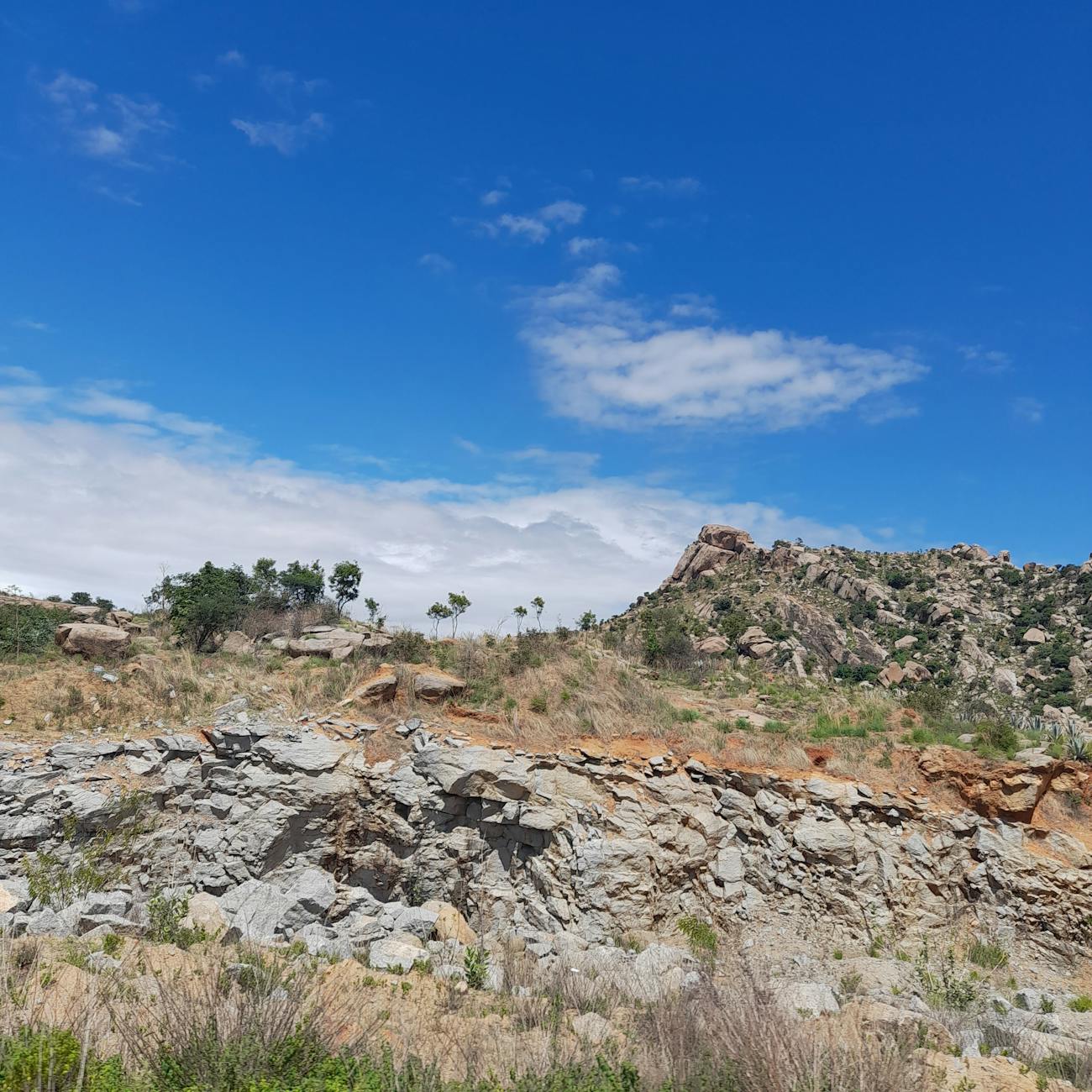
Slope Stability #
Slope Stability
Slope stability refers to the resistance of a slope to failure or collapse #
It is a critical aspect of engineering geology and soil mechanics as it determines the safety and stability of structures built on or near slopes. The stability of a slope is influenced by various factors such as the slope angle, geology of the slope material, groundwater conditions, and external forces like earthquakes and rainfall.
Rock Mechanics #
Rock Mechanics
Rock mechanics is the study of the mechanical behavior of rocks and rock masses #
It is a key discipline in geotechnical engineering and is essential for understanding the stability of rock slopes, tunnels, foundations, and other rock engineering structures. Rock mechanics involves analyzing the strength, deformation, and failure of rocks under different loading conditions.
Concepts #
Concepts
Shear Strength #
Shear Strength
Shear strength is the ability of a material to resist shear forces that cause sl… #
In slope stability analysis, shear strength is a critical parameter as it determines the stability of the slope. The shear strength of a soil or rock mass is influenced by factors such as the type of material, pore water pressure, and stress conditions.
Factor of Safety #
Factor of Safety
The factor of safety is a ratio that compares the resisting forces to the drivin… #
It is used to assess the stability of a slope and is calculated by dividing the resisting forces (shear strength) by the driving forces (gravity, external loads). A factor of safety greater than 1 indicates that the slope is stable, while a factor less than 1 signifies potential failure.
Slope Angle #
Slope Angle
The slope angle is the angle at which a slope intersects the horizontal plane #
It is a crucial factor in determining slope stability as steeper slopes are more prone to failure than gentler slopes. The slope angle is influenced by the strength of the rock or soil, the presence of discontinuities, and external factors like water infiltration.
Failure Mechanisms #
Failure Mechanisms
Failure mechanisms refer to the modes of failure that can occur in a slope or ro… #
Common failure mechanisms include sliding, toppling, and rockfall. Understanding the failure mechanisms is essential for predicting and mitigating slope instability and ensuring the safety of structures built on or near slopes.
Terms #
Terms
Back Analysis #
Back Analysis
Back analysis is a method used to determine the properties of a soil or rock mas… #
It involves analyzing the performance of a slope or foundation and using this information to back calculate the shear strength parameters or other properties of the material. Back analysis is useful for refining design parameters and improving the accuracy of slope stability assessments.
Rock Mass Classification #
Rock Mass Classification
Rock mass classification is a systematic approach to categorize rock masses base… #
Various classification systems, such as the Rock Mass Rating (RMR) and the Geological Strength Index (GSI), are used to assess the quality and behavior of rock masses. Rock mass classification is essential for designing rock engineering structures and predicting slope stability.
Discontinuities #
Discontinuities
Discontinuities are fractures, joints, or bedding planes that exist in rock mass… #
Discontinuities act as planes of weakness along which failure can occur, leading to slope instability. Understanding the orientation, spacing, and roughness of discontinuities is crucial for assessing the stability of rock slopes and designing support systems.
Rockfall Hazard #
Rockfall Hazard
Rockfall hazard refers to the risk of rocks or debris falling from a slope and p… #
Rockfall hazards are common in mountainous regions and areas with steep slopes. Mitigating rockfall hazards involves identifying unstable rock masses, installing rockfall protection measures, and monitoring slope stability to prevent accidents.
Challenges #
Challenges
Uncertainty in Shear Strength Parameters #
Uncertainty in Shear Strength Parameters
One of the primary challenges in slope stability analysis is the uncertainty ass… #
Shear strength parameters vary spatially and are influenced by factors such as weathering, stress history, and sample disturbance. Estimating accurate shear strength parameters is crucial for reliable slope stability assessments.
Dynamic Loading #
Dynamic Loading
Dynamic loading events such as earthquakes, heavy rainfall, or blasting can sign… #
Dynamic loading can induce rapid changes in stress conditions, pore water pressure, and material properties, leading to slope failures. Incorporating dynamic loading effects into slope stability analysis presents a challenge due to the complex interactions between the loading event and the slope geometry.
Long #
Term Stability
Assessing the long #
term stability of slopes and rock engineering structures is a challenge due to the influence of time-dependent factors such as weathering, erosion, and creep. Predicting how a slope will behave over years or decades requires considering the cumulative effects of these processes on the material properties and stability of the slope. Long-term stability assessments are essential for ensuring the safety and durability of infrastructure built on slopes.
Scale Effects #
Scale Effects
Scale effects refer to the changes in the behavior of rock masses or slopes when… #
The scale effects can influence the strength, deformation, and failure mechanisms of rock masses, making it challenging to extrapolate laboratory test results to real-world applications. Understanding and accounting for scale effects is crucial for accurate slope stability analysis and design.
Applications #
Applications
Slope Stability Analysis #
Slope Stability Analysis
Slope stability analysis is used in geotechnical engineering to assess the stabi… #
It involves evaluating the factors that influence slope stability, such as geology, groundwater conditions, and external loads, to determine the safety of a slope. Slope stability analysis helps engineers design appropriate slope reinforcement measures and prevent slope failures.
Rock Slope Stabilization #
Rock Slope Stabilization
Rock slope stabilization involves implementing engineering measures to prevent r… #
Techniques such as rock bolting, slope scaling, rockfall barriers, and shotcrete are used to stabilize unstable rock slopes and protect infrastructure and people below. Rock slope stabilization is essential in mountainous regions and areas with high rockfall hazards.
Foundations on Rock #
Foundations on Rock
Designing foundations on rock requires considering the geotechnical properties o… #
Rock foundations can be supported by shallow foundations, such as spread footings or raft foundations, or deep foundations, such as piles or caissons. Understanding the rock mass characteristics and conducting thorough site investigations are critical for designing safe and efficient rock foundations.
Tunneling in Rock #
Tunneling in Rock
Tunneling in rock involves excavating tunnels through rock masses for transporta… #
Rock mechanics plays a crucial role in tunnel design and construction to ensure the stability of the tunnel and prevent collapses or rockbursts. Proper support systems, such as rock bolts, shotcrete, and steel ribs, are used to reinforce the tunnel walls and maintain stability during excavation.
Conclusion #
Conclusion
In conclusion, understanding slope stability and rock mechanics is essential for… #
By analyzing the shear strength, slope angle, failure mechanisms, and other key factors influencing slope stability, engineers can design effective slope reinforcement measures and mitigate slope hazards. Rock mechanics principles are crucial for assessing the behavior of rock masses, designing rock engineering structures, and preventing slope failures. By addressing challenges such as uncertainty in shear strength parameters, dynamic loading effects, and long-term stability assessments, engineers can improve the accuracy and reliability of slope stability analysis. The applications of slope stability analysis and rock mechanics in areas such as slope stabilization, foundation design, and tunneling demonstrate the importance of these concepts in geotechnical engineering and soil mechanics.