
Algorithmic Trading Strategies
Algorithmic trading with CFDs involves using computer programs to automatically execute trades based on predefined rules, and understanding the key terms and vocabulary is essential for success in this field. One of the most important conce…
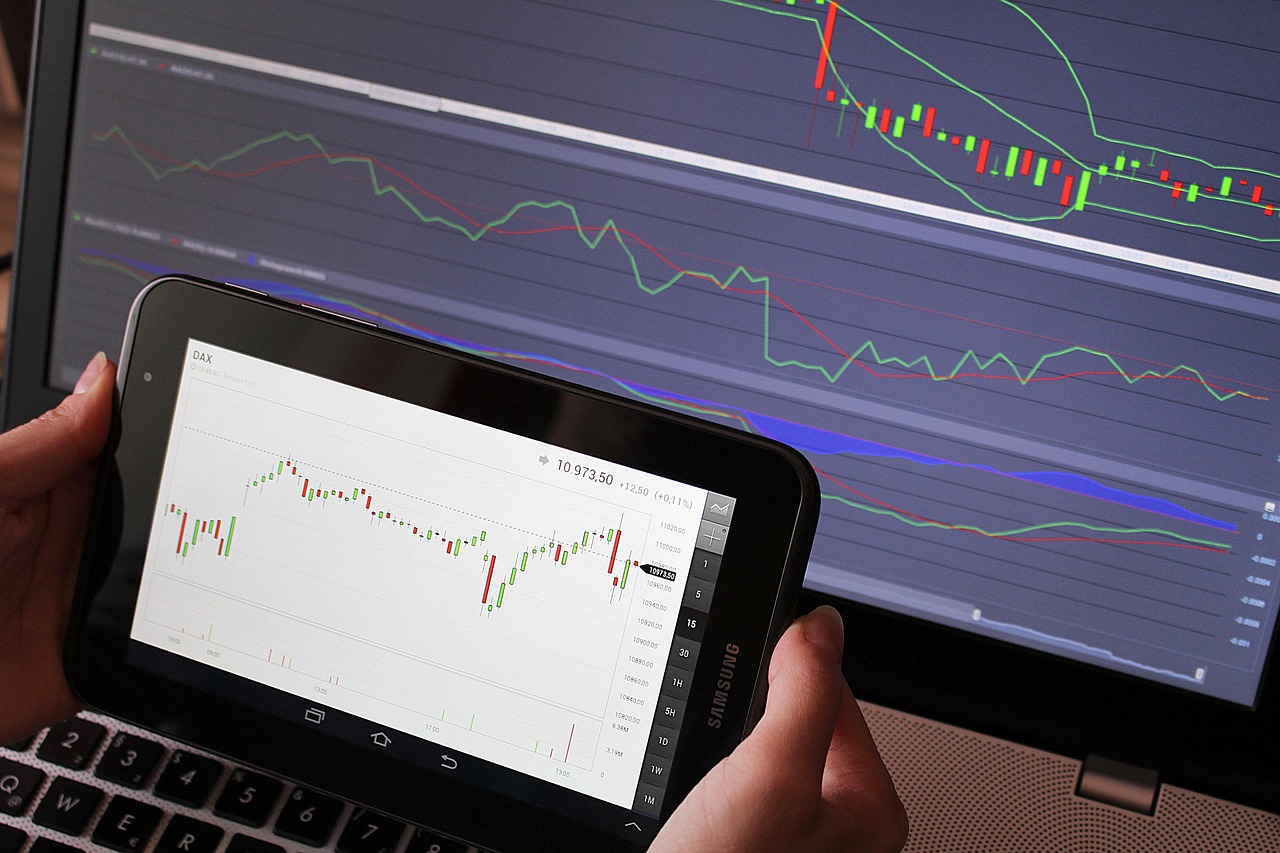
Algorithmic trading with CFDs involves using computer programs to automatically execute trades based on predefined rules, and understanding the key terms and vocabulary is essential for success in this field. One of the most important concepts is the trading strategy, which refers to the set of rules and guidelines that a trader uses to make investment decisions. A trading strategy can be based on technical analysis, fundamental analysis, or a combination of both. Technical analysis involves studying charts and patterns to identify trends and predict future price movements, while fundamental analysis involves studying the underlying factors that affect the price of a security, such as earnings and economic indicators.
A key component of a trading strategy is the risk management plan, which outlines the steps a trader will take to limit potential losses. This can include setting stop-loss orders, limiting position size, and diversifying a portfolio. A stop-loss order is an instruction to sell a security when it falls to a certain price, and it can help to limit losses if a trade does not go as planned. Position size refers to the amount of capital allocated to a particular trade, and it is an important consideration in risk management. Diversification involves spreading investments across different asset classes and sectors to reduce exposure to any one particular market or security.
Another important concept in algorithmic trading is the backtest, which involves testing a trading strategy on historical data to evaluate its performance. A backtest can help a trader to identify potential flaws in a strategy and make adjustments before implementing it in a live trading environment. There are several metrics that can be used to evaluate the performance of a trading strategy, including profit/loss ratio, win/loss ratio, and maximum drawdown. The profit/loss ratio refers to the ratio of the total profits to the total losses, while the win/loss ratio refers to the ratio of the number of winning trades to the number of losing trades. Maximum drawdown refers to the largest peak-to-trough decline in the value of a portfolio.
In addition to these metrics, traders also use technical indicators to evaluate the performance of a trading strategy. Technical indicators are mathematical calculations based on the price and volume of a security, and they can be used to identify trends, predict future price movements, and generate buy and sell signals. Some common technical indicators include moving averages, relative strength index (RSI), and Bollinger Bands. A moving average is a calculation of the average price of a security over a certain period of time, and it can be used to identify trends and generate buy and sell signals. RSI is a measure of the magnitude of recent price changes, and it can be used to identify overbought and oversold conditions. Bollinger Bands are a volatility-based indicator that consists of a moving average and two standard deviations plotted above and below it.
Algorithmic traders also use programming languages to develop and implement their trading strategies. One of the most popular programming languages for algorithmic trading is Python, which is a versatile and easy-to-learn language that has a wide range of libraries and tools available for trading. Other popular programming languages for algorithmic trading include C++, Java, and MATLAB. These languages can be used to develop trading algorithms, connect to brokerage platforms, and execute trades.
A key challenge in algorithmic trading is the latency issue, which refers to the delay between the time a trade is executed and the time it is confirmed. Latency can be a significant problem in high-frequency trading, where traders need to execute trades quickly to take advantage of small price movements. To minimize latency, traders use high-speed networks and hardware, such as co-location servers and fiber optic cables. Co-location servers are located in the same data center as the exchange, which can reduce latency by milliseconds. Fiber optic cables are high-speed cables that can transmit data at speeds of up to 10 Gbps.
Another challenge in algorithmic trading is the slippage issue, which refers to the difference between the expected price of a trade and the actual price. Slippage can occur when a trader is trying to execute a large trade, and it can result in significant losses if not managed properly. To minimize slippage, traders use order management systems, such as limit orders and stop-loss orders. A limit order is an instruction to buy or sell a security at a specific price, while a stop-loss order is an instruction to sell a security when it falls to a certain price.
In addition to these challenges, algorithmic traders also face regulatory challenges, such as compliance with securities laws and regulations. Algorithmic traders must comply with regulations such as the Dodd-Frank Act, which requires traders to register with the Commodity Futures Trading Commission (CFTC) and comply with certain rules and guidelines. They must also comply with regulations such as the General Data Protection Regulation (GDPR), which requires traders to protect the personal data of their clients.
A key concept in algorithmic trading is the market microstructure, which refers to the mechanics of how trades are executed in a market. Market microstructure includes factors such as the bid-ask spread, which is the difference between the price at which a trader can buy a security and the price at which they can sell it. The bid-ask spread can have a significant impact on trading costs, and it is an important consideration in algorithmic trading. Other factors that affect market microstructure include liquidity, which refers to the ability to buy or sell a security quickly and at a fair price, and volatility, which refers to the degree of uncertainty or risk associated with the price of a security.
To navigate these challenges and complexities, algorithmic traders use a variety of tools and techniques, such as backtesting software, trading platforms, and risk management systems. Backtesting software allows traders to test their strategies on historical data, while trading platforms provide the infrastructure for executing trades. Risk management systems help traders to limit their losses and protect their capital. These tools and techniques can help traders to develop and implement successful algorithmic trading strategies, but they require a deep understanding of the underlying concepts and principles.
One of the most popular algorithmic trading strategies is the trend following strategy, which involves identifying and following the direction of market trends. Trend following strategies can be based on technical indicators such as moving averages, or they can be based on fundamental factors such as earnings and economic indicators. Another popular strategy is the mean reversion strategy, which involves identifying overbought and oversold conditions and betting on a return to the mean. Mean reversion strategies can be based on technical indicators such as RSI, or they can be based on fundamental factors such as valuation ratios.
In addition to these strategies, algorithmic traders also use statistical models to identify patterns and trends in the data. Statistical models can be used to forecast future price movements, or they can be used to identify the underlying factors that drive market trends. Some common statistical models used in algorithmic trading include linear regression, time series analysis, and machine learning algorithms. Linear regression involves modeling the relationship between a dependent variable and one or more independent variables, while time series analysis involves modeling the patterns and trends in a time series dataset. Machine learning algorithms involve training a model on a dataset and using it to make predictions or classify new data.
A key challenge in developing and implementing algorithmic trading strategies is the data quality issue, which refers to the accuracy and completeness of the data used to develop and test the strategy. Data quality can have a significant impact on the performance of a trading strategy, and it is an important consideration in algorithmic trading. To address this issue, traders use data cleaning and preprocessing techniques, such as handling missing values, removing outliers, and normalizing the data. They also use data visualization tools to understand and explore the data, and to identify patterns and trends.
In addition to these techniques, algorithmic traders also use portfolio optimization methods to optimize the performance of their portfolios. Portfolio optimization involves identifying the optimal mix of assets to hold in a portfolio, given a set of constraints and objectives. Some common portfolio optimization methods include the Markowitz model, which involves optimizing the portfolio based on the expected return and volatility of the assets, and the Black-Litterman model, which involves combining the expected returns of the assets with the investor's prior beliefs. These methods can help traders to develop and implement successful algorithmic trading strategies, but they require a deep understanding of the underlying concepts and principles.
To stay ahead of the competition, algorithmic traders must also stay up-to-date with the latest research and developments in the field. This can involve attending conferences and seminars, reading industry publications, and participating in online forums and discussions. It can also involve experimenting with new technologies and tools, such as cloud computing, artificial intelligence, and blockchain. These technologies can provide traders with a competitive edge, but they require a deep understanding of the underlying concepts and principles.
A key concept in algorithmic trading is the trading environment, which refers to the infrastructure and systems used to execute trades. The trading environment includes factors such as the brokerage platform, the exchange, and the clearing system. The brokerage platform provides the interface for executing trades, while the exchange provides the marketplace for buying and selling securities. The clearing system provides the infrastructure for settling trades and managing risk. These components must work together seamlessly to provide a smooth and efficient trading experience.
In addition to these components, the trading environment also includes regulatory bodies, such as the Securities and Exchange Commission (SEC) and the Commodity Futures Trading Commission (CFTC). These regulatory bodies provide oversight and guidance for the trading environment, and they help to ensure that traders comply with securities laws and regulations. They also help to maintain the integrity of the markets, and to protect investors from fraud and manipulation.
To navigate the complexities of the trading environment, algorithmic traders use a variety of tools and techniques, such as order management systems, risk management systems, and performance metrics. Order management systems help traders to manage their orders and execute trades efficiently, while risk management systems help traders to limit their losses and protect their capital. Performance metrics help traders to evaluate the performance of their strategies and make adjustments as needed.
One of the most popular algorithmic trading platforms is the MetaTrader platform, which provides a comprehensive set of tools and features for developing and implementing trading strategies. The MetaTrader platform includes a programming language, a backtesting engine, and a trading interface. The programming language allows traders to develop and implement their own trading strategies, while the backtesting engine allows traders to test their strategies on historical data. The trading interface provides a user-friendly interface for executing trades and managing orders.
In addition to the MetaTrader platform, there are also other popular algorithmic trading platforms, such as the NinjaTrader platform and the TradeStation platform. These platforms provide a range of tools and features for developing and implementing trading strategies, including programming languages, backtesting engines, and trading interfaces. They also provide access to a range of markets and instruments, including stocks, options, futures, and forex.
To get started with algorithmic trading, traders need to have a deep understanding of the underlying concepts and principles, as well as a range of skills and knowledge. These skills and knowledge include programming languages, such as Python or C++, as well as experience with trading platforms and markets. Traders also need to have a strong understanding of risk management and performance metrics, as well as the ability to analyze and interpret large datasets. They also need to have a strong understanding of the regulatory environment and the compliance requirements for algorithmic trading.
In addition to these skills and knowledge, traders also need to have access to a range of resources and tools, such as computing power, data feeds, and software libraries. These resources and tools can help traders to develop and implement successful algorithmic trading strategies, but they require a deep understanding of the underlying concepts and principles. Traders also need to have a strong understanding of the trading environment and the market microstructure, as well as the ability to navigate the complexities of the trading environment.
A key challenge in algorithmic trading is the competition issue, which refers to the competition between traders to develop and implement the most successful trading strategies. This competition can drive innovation and improvement in the field, but it can also lead to risks and challenges for traders. To stay ahead of the competition, traders must be able to develop and implement unique and innovative trading strategies, as well as stay up-to-date with the latest research and developments in the field.
In addition to the competition issue, algorithmic traders also face a range of other challenges and risks, such as the latency issue, the slippage issue, and the regulatory issue. These challenges and risks can have a significant impact on the performance of a trading strategy, and they must be carefully managed and mitigated. To address these challenges and risks, traders use a range of tools and techniques, such as order management systems, risk management systems, and performance metrics.
To develop and implement successful algorithmic trading strategies, traders must also have a deep understanding of the underlying mathematics and statistics. This includes a strong understanding of probability theory, statistics, and linear algebra, as well as the ability to apply these concepts to real-world problems. Traders must also have a strong understanding of the computer science aspects of algorithmic trading, including programming languages, data structures, and software engineering.
In addition to the mathematical and computational aspects of algorithmic trading, traders must also have a strong understanding of the financial markets and instruments. This includes a strong understanding of the stocks, bonds, commodities, and currencies markets, as well as the ability to analyze and interpret financial data. Traders must also have a strong understanding of the regulatory environment and the compliance requirements for algorithmic trading.
To stay up-to-date with the latest research and developments in the field, algorithmic traders must also be able to read and understand academic papers and industry reports. This includes a strong understanding of the methodologies and techniques used in the field, as well as the ability to critically evaluate and apply the results of research studies. Traders must also be able to attend conferences and seminars, and participate in online forums and discussions.
In conclusion, algorithmic trading with CFDs is a complex and challenging field that requires a deep understanding of the underlying concepts and principles. To develop and implement successful algorithmic trading strategies, traders must have a range of skills and knowledge, including programming languages, trading platforms, and markets. They must also have access to a range of resources and tools, such as computing power, data feeds, and software libraries. By staying up-to-date with the latest research and developments in the field, and by carefully managing and mitigating the risks and challenges of algorithmic trading, traders can develop and implement successful algorithmic trading strategies that generate consistent profits and minimize losses.
Key takeaways
- Algorithmic trading with CFDs involves using computer programs to automatically execute trades based on predefined rules, and understanding the key terms and vocabulary is essential for success in this field.
- A stop-loss order is an instruction to sell a security when it falls to a certain price, and it can help to limit losses if a trade does not go as planned.
- The profit/loss ratio refers to the ratio of the total profits to the total losses, while the win/loss ratio refers to the ratio of the number of winning trades to the number of losing trades.
- Technical indicators are mathematical calculations based on the price and volume of a security, and they can be used to identify trends, predict future price movements, and generate buy and sell signals.
- One of the most popular programming languages for algorithmic trading is Python, which is a versatile and easy-to-learn language that has a wide range of libraries and tools available for trading.
- A key challenge in algorithmic trading is the latency issue, which refers to the delay between the time a trade is executed and the time it is confirmed.
- A limit order is an instruction to buy or sell a security at a specific price, while a stop-loss order is an instruction to sell a security when it falls to a certain price.