
Dry Dock Repair
Dry dock is a specialized basin or structure that can be flooded to allow a vessel to float in and then drained so the ship rests on a support system for inspection, maintenance, or repair. Understanding the terminology associated with dry‑…
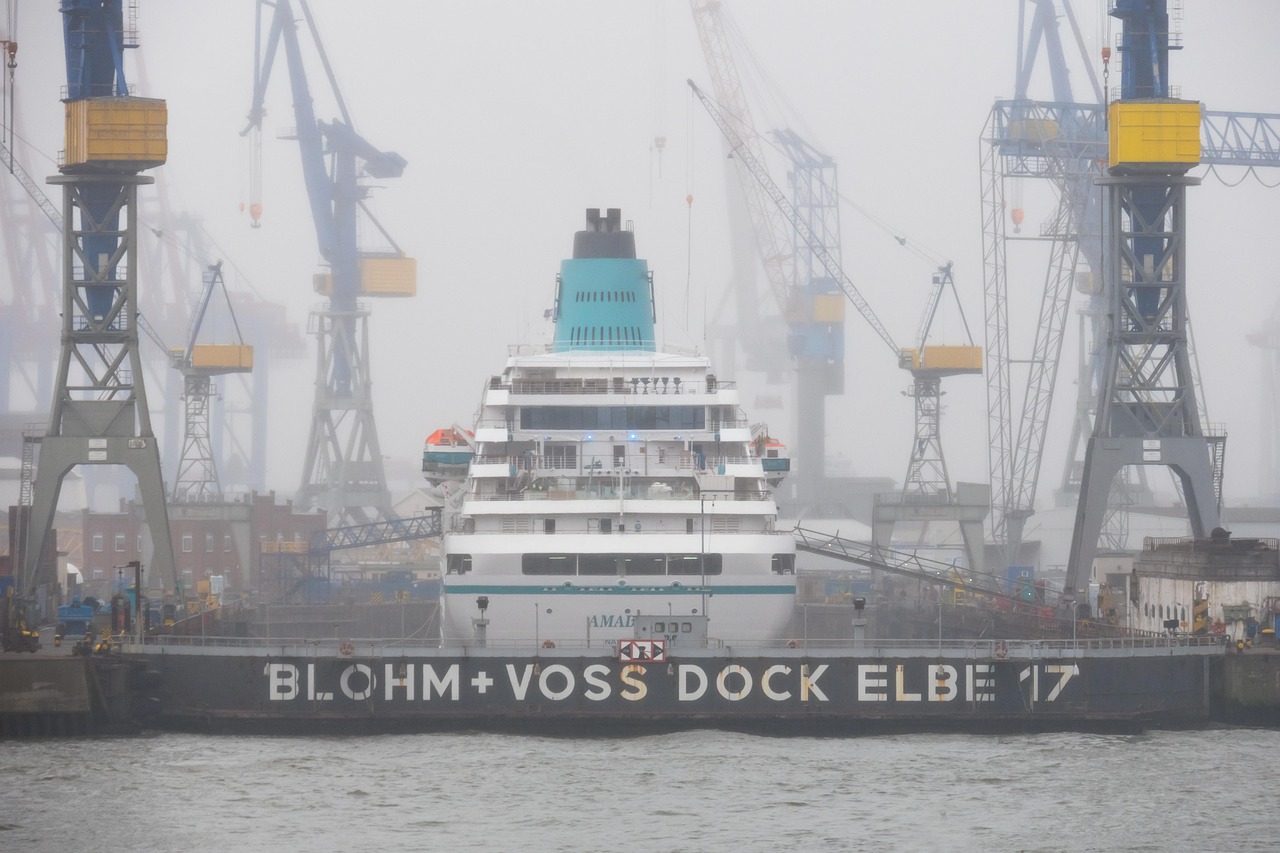
Dry dock is a specialized basin or structure that can be flooded to allow a vessel to float in and then drained so the ship rests on a support system for inspection, maintenance, or repair. Understanding the terminology associated with dry‑dock repair is essential for effective management, budgeting, and safety compliance. The following glossary presents the most frequently encountered terms, grouped by functional area, and includes definitions, practical examples, typical applications, and common challenges faced by practitioners.
Keel – The principal longitudinal structural member of a hull, running along the bottom from bow to stern. The keel provides the backbone of the ship and carries longitudinal loads. In a dry‑dock setting the keel is often the first point of contact for keel blocks, which support the vessel when the water is pumped out. Example: When a container ship enters a dry dock, engineers verify the alignment of the keel blocks to prevent uneven loading that could cause hull distortion. Challenge: Misaligned keel blocks can lead to excessive stress on the hull plating, requiring costly realignment and potential hull repair.
Keel block – A reinforced concrete or steel block placed under the keel to support the ship’s weight while in dry dock. Blocks are positioned according to the vessel’s design specifications, typically at intervals defined by the vessel’s longitudinal spacing. Practical application: For a tanker with a length of 250 m, the dock plan may call for eight keel blocks spaced at 30 m intervals. Challenge: Blocks must be inspected for cracks or settlement before each docking; failure to do so can result in block collapse and severe hull damage.
Bilge – The lowest internal part of the hull where water collects. During dry‑dock preparation, bilge pumps are used to remove any residual water. Example: Prior to dry‑dock entry, the crew empties the bilge to avoid excess weight that could affect the docking position. Challenge: Corrosion and bio‑fouling in the bilge can obscure leaks, making it difficult to assess the true condition of the hull until the ship is dry.
Scantling – The dimensions and thickness of structural elements such as plates, frames, and girders. Scantling schedules specify the required material properties for each part of the hull. In dry‑dock repair, scantling verification is performed to ensure that any replaced plates meet the original design criteria. Practical application: When a hull plate is found to be thinned by corrosion, a replacement plate must match the original scantling to maintain structural integrity. Challenge: Procuring steel that meets the exact scantling can be time‑consuming, especially for older vessels built to legacy standards.
Hull plating – The external metal sheets that form the outer skin of the ship. Damage to hull plating, such as cracks, dents, or corrosion, is a common reason for dry‑dock repairs. Example: A cruise liner scheduled for a 12‑month refit was found to have extensive hull plating corrosion in the mid‑section, prompting a comprehensive plating replacement program. Challenge: Welding new plating to an existing hull often requires careful heat‑control to prevent distortion of surrounding structures.
Frame – The transverse structural members that give shape and strength to the hull. Frames are numbered from the bow and are referenced in repair orders. Practical application: During a dry‑dock inspection, inspectors may note that frames 45 to 50 exhibit buckling, leading to a targeted reinforcement plan. Challenge: Accessing frames in a tightly confined area can be difficult, requiring specialized scaffolding or remote inspection tools.
Girders – Longitudinal structural members that run fore‑to‑aft, connecting frames and distributing loads. Girders are essential for maintaining hull rigidity. Example: In a bulk carrier, the main longitudinal girder must be inspected for fatigue cracks before the vessel returns to service. Challenge: Detecting girder cracks often requires non‑destructive testing (NDT) techniques such as ultrasonic testing, which can be costly and time‑intensive.
Scupper – An opening in the deck that allows water to drain overboard. In dry dock, scuppers must be sealed or blocked to prevent water ingress that could affect the stability of the vessel while on blocks. Practical application: Before the dock is drained, the crew installs temporary sealing plates over all scuppers. Challenge: Improper sealing can lead to water accumulation on deck, causing uneven weight distribution and potential safety hazards.
Docking plan – A detailed schematic that outlines the positioning of blocks, cradles, and support structures for a specific vessel. The plan includes block spacing, load calculations, and safety margins. Example: The docking plan for a 300‑meter LNG carrier includes 12 keel blocks and 20 side blocks, each rated for a specific tonnage. Challenge: Deviations from the plan due to unexpected hull deformation require rapid re‑engineering to avoid overloading any single block.
Side block – A support placed against the ship’s side to prevent rolling or lateral movement while the dock is drained. Side blocks are positioned according to the vessel’s beam and hull form. Practical application: For a vessel with a beam of 45 m, side blocks are placed at 15 m intervals along each side. Challenge: Incorrect side‑block placement can cause the hull to shift during drainage, potentially damaging the hull or the dock structure.
Cradle – A custom‑fabricated support structure that conforms to the hull shape, often used for vessels with complex geometry or when conventional blocks are insufficient. Cradles distribute loads more evenly across the hull. Example: A naval frigate with a bulbous bow required a cradle to support the forward section during dry‑dock work. Challenge: Designing and fabricating a cradle is resource‑intensive, requiring precise measurements and engineering analysis.
Ballast – Weight, usually water, added to a vessel to improve stability, trim, and stress distribution. In dry dock, ballast tanks are emptied to lower the ship onto the blocks. Practical application: Prior to docking, the crew pumps out ballast from the forward tanks to achieve the correct trim for block alignment. Challenge: Residual ballast water can create uneven loading, leading to hull distortion or block overload.
Trim – The longitudinal inclination of a vessel, defined by the difference between the forward and aft drafts. Proper trim is essential for safe docking. Example: A cargo ship with a forward draft of 9 m and an aft draft of 8 m has a slight forward trim that must be corrected before entering the dock. Challenge: Achieving the desired trim may require coordinated ballast adjustments and careful monitoring during the docking process.
Stability – The ability of a vessel to resist rolling and capsizing. In dry dock, stability is managed by ensuring the ship’s weight is evenly distributed on the blocks. Practical application: Engineers calculate the ship’s center of gravity and verify that the support points keep the vessel within safe stability limits. Challenge: Changes in equipment or cargo during repair can shift the center of gravity, necessitating re‑evaluation of stability before the dock is reflooded.
Shoring – Temporary supports used to hold structures in place during repair or construction. In dry dock, shoring may be employed to support hull sections while plates are removed. Example: When a damaged bow section is being cut out, shoring frames are erected to prevent deformation of adjacent hull sections. Challenge: Shoring must be designed to carry the anticipated loads; insufficient shoring can lead to collapse and injury.
Blast cleaning – A surface preparation technique that uses high‑pressure abrasive media to remove rust, old paint, and contaminants from steel surfaces. Essential before painting or coating. Practical application: After hull plating removal, workers perform blast cleaning to achieve a surface profile of 3 mm, suitable for the new coating system. Challenge: Controlling dust and abrasive particles is critical to protect workers’ health and prevent environmental contamination.
Painting – Application of protective coatings to prevent corrosion and fouling. Dry‑dock painting processes often involve multiple layers, including primers, intermediate coats, and topcoats. Example: A vessel undergoing a 15‑year maintenance cycle receives a new antifouling paint system that includes a zinc-rich primer and a copper‑based topcoat. Challenge: Achieving proper adhesion requires meticulous surface preparation; any lapses can lead to premature coating failure.
Coating system – The combination of primer, intermediate, and topcoat materials selected for a specific vessel type and operating environment. Coating systems are often specified by classification societies. Practical application: For a ship operating in Arctic waters, a cold‑resistant epoxy coating is chosen to maintain flexibility at low temperatures. Challenge: Selecting an inappropriate coating can result in cracking, blistering, or accelerated corrosion.
Corrosion – The chemical or electrochemical degradation of metal due to environmental exposure. In marine environments, corrosion is a primary driver for dry‑dock repairs. Example: A bulk carrier exhibited extensive corrosion in its cargo hold plates, necessitating plate replacement and cathodic protection upgrades. Challenge: Detecting hidden corrosion requires thorough inspection, often using ultrasonic thickness measurement or visual examination after paint removal.
Cathodic protection – A method of preventing corrosion by making the hull a cathode of an electrochemical cell, typically using sacrificial anodes or impressed current systems. In dry dock, cathodic protection systems are inspected and repaired as needed. Practical application: During a dry‑dock survey, the crew replaces depleted zinc anodes on a container ship to restore effective protection. Challenge: Improper installation of anodes can lead to uneven protection and localized corrosion.
Hull inspection – The systematic examination of the hull’s condition, including visual checks, thickness measurements, and non‑destructive testing. Hull inspection is a core activity in dry‑dock repair. Example: Inspectors use ultrasonic gauges to measure plate thickness, identifying areas where the metal has thinned below the minimum required scantling. Challenge: Accessing certain hull regions may require dismantling adjacent structures, increasing labor time and cost.
Non‑destructive testing (NDT) – Techniques used to evaluate material properties without causing damage, such as ultrasonic testing, radiography, magnetic particle inspection, and eddy‑current testing. NDT is integral to assessing weld quality and detecting hidden defects. Practical application: After welding a new deck plate, a certified NDT technician performs ultrasonic testing to verify soundness of the weld. Challenge: Interpreting NDT results requires specialized training; false positives can lead to unnecessary repairs, while false negatives can miss critical defects.
Welding – The process of joining metal components by heating and fusing them, often using arc, MIG, or TIG methods. In dry‑dock repair, welding is used for plate replacement, structural reinforcement, and system installation. Example: A cracked hull girder is repaired by cutting out the damaged section and welding a new steel splice. Challenge: Managing heat input is essential to avoid distortion; excessive heat can cause warping of adjacent plates.
Fit‑up – The arrangement and alignment of components before welding. Proper fit‑up ensures that joints are correctly positioned and that welds will have the appropriate geometry. Practical application: Before welding a replacement plate, the crew uses clamps and temporary bolts to hold the plate flush with the surrounding hull. Challenge: Poor fit‑up can result in gaps, leading to weak welds and potential failure under load.
Weld inspection – The evaluation of weld quality, typically involving visual examination and NDT methods. Weld inspection verifies that welds meet code requirements and design specifications. Example: After completing a series of longitudinal welds, an inspector conducts magnetic particle testing to detect surface cracks. Challenge: Scheduling inspections can delay progress; however, skipping inspections risks non‑conformity and future structural issues.
Hot‑work permit – A formal authorization required for any work that generates heat, sparks, or flame, such as welding or cutting, to ensure fire safety. In dry dock, a hot‑work permit is mandatory before any welding operation. Practical application: The permit outlines safety measures, required fire extinguishers, and personnel responsibilities. Challenge: Failure to adhere to permit conditions can lead to fires, especially in confined dry‑dock environments with flammable residues.
Cutting – The removal of metal, often using oxy‑fuel or plasma torches, to eliminate damaged sections before replacement. Cutting is a preparatory step in many repair procedures. Example: A corroded portion of a hull plate is cut out using an oxy‑acetylene torch, leaving a clean edge for a new plate. Challenge: Cutting generates heat and sparks; proper fire watch and ventilation are essential to prevent accidents.
Scaffold – Temporary elevated work platforms that provide access to various parts of the vessel during repair. Scaffolds must be designed to support workers and equipment safely. Practical application: A scaffold is erected around the ship’s mid‑section to allow painters to apply coating to the hull below deck. Challenge: Scaffold stability can be compromised by uneven dock floors or unexpected loads, requiring regular inspection.
Safety harness – Personal protective equipment (PPE) used to prevent falls when working at height. In dry dock, safety harnesses are mandatory for any work above a certain height. Example: A worker climbing a scaffold to apply paint uses a full‑body harness attached to a secure anchor point. Challenge: Improper harness use or inadequate anchorage can result in severe injuries.
Lockout‑tagout (LOTO) – A safety procedure to ensure that machinery or energy sources are disabled and cannot be re‑energized while work is being performed. LOTO is essential when dealing with pumps, generators, or hydraulic systems in dry dock. Practical application: Before draining the dock, the main pump is locked out and tagged to prevent accidental start‑up. Challenge: Coordinating LOTO across multiple teams can be complex, especially in large‑scale dockings.
Environmental compliance – Adherence to regulations governing waste disposal, emissions, and water quality. Dry‑dock facilities must manage hazardous waste such as solvents, paint chips, and oily water. Example: Paint chips generated during hull coating removal are collected in sealed containers for proper disposal according to local regulations. Challenge: Non‑compliance can result in fines, work stoppages, and reputational damage.
Hazardous material – Substances that pose a risk to health or the environment, including asbestos, lead‑based paint, and certain cleaning solvents. Identification and safe handling of hazardous materials are critical in dry‑dock repair. Practical application: During a pre‑dry‑dock survey, asbestos insulation is discovered in the engine room; a certified abatement team is engaged to remove it. Challenge: Handling hazardous materials requires specialized training and equipment, increasing project complexity and cost.
Work‑order – A documented request that outlines the scope, schedule, and resources needed for a specific repair activity. Work‑orders drive the planning and execution of dry‑dock tasks. Example: A work‑order may specify “Replace hull plating on frames 120‑125, including cutting, welding, and painting.” Challenge: Inaccurate or incomplete work‑orders can lead to scope creep, rework, and budget overruns.
Project schedule – A timeline that details the start and finish dates for each activity, often represented in a Gantt chart. In dry dock, the schedule must accommodate vessel availability, dock capacity, and regulatory inspections. Practical application: The schedule allocates 10 days for hull cleaning, 15 days for plate replacement, and 7 days for coating application. Challenge: Delays in one activity (e.g., unexpected corrosion) can cascade, jeopardizing the overall completion date.
Critical path – The sequence of tasks that determines the minimum project duration; any delay on the critical path extends the overall schedule. Identifying the critical path helps managers prioritize resources. Example: Welding of structural members is on the critical path; therefore, additional welders are assigned to ensure timely completion. Challenge: Overlooking a task’s impact on the critical path can cause bottlenecks and cost overruns.
Resource allocation – The process of assigning personnel, equipment, and materials to specific tasks. Effective allocation optimizes productivity and minimizes idle time. Practical application: A crane is scheduled to be available for plate removal on days 3‑5, while a welding crew is assigned to days 6‑12. Challenge: Conflicts can arise when multiple tasks compete for the same resource, requiring careful coordination.
Cost estimate – A financial projection of the expenses required to complete dry‑dock repair, including labor, materials, subcontractor fees, and contingency. Accurate cost estimating is vital for budgeting and client approval. Example: The estimate for a mid‑size vessel includes $1.2 million for hull plating, $300 000 for coating, and $150 000 for ancillary work. Challenge: Unexpected findings, such as hidden corrosion, can inflate costs beyond the original estimate.
Contingency – An allocated amount of budget or time reserved for unforeseen events. In dry‑dock projects, a typical contingency might be 10‑15 % of the total cost. Practical application: If additional corrosion is discovered, the contingency fund can cover the extra plating and labor. Challenge: Over‑reliance on contingency can mask poor planning; under‑allocation can lead to financial strain.
Change order – A formal amendment to the original work‑order that modifies scope, cost, or schedule. Change orders arise when new work is identified during the repair process. Example: A change order is issued to add reinforcement to a deck beam after a structural assessment reveals insufficient strength. Challenge: Managing change orders requires clear documentation and approval to avoid disputes.
Quality control (QC) – The systematic processes used to ensure that work meets specified standards and requirements. QC activities include inspections, testing, and documentation. Practical application: A QC inspector conducts daily checks on welding parameters and verifies that paint thickness meets specification. Challenge: Maintaining consistent QC across multiple subcontractors can be difficult, especially when standards differ.
Quality assurance (QA) – The overarching management system that defines policies, procedures, and responsibilities to achieve quality objectives. QA ensures that QC processes are properly implemented and monitored. Example: The QA plan outlines the sequence of inspections, record‑keeping protocols, and audit schedules for the dry‑dock project. Challenge: Integrating QA into fast‑paced repair schedules without causing delays requires careful planning.
Documentation – The collection of records, drawings, certificates, and reports that provide evidence of work performed. Proper documentation is essential for regulatory compliance and future reference. Practical application: After completing hull plating, the team uploads welding certificates, inspection reports, and material test certificates to a centralized database. Challenge: Incomplete or inaccurate documentation can lead to non‑conformity findings during classification society surveys.
Classification society – An organization that establishes technical standards for the design, construction, and maintenance of ships, and conducts surveys to verify compliance. Examples include ABS, DNV, and Lloyd’s Register. In dry‑dock repair, classification societies may mandate specific inspections or approve repair methods. Challenge: Meeting differing society requirements can increase complexity, especially for vessels that have changed classification during their service life.
Survey – An inspection conducted by a classification society or authorized surveyor to assess the condition of a vessel and verify compliance with regulations. Surveys are typically scheduled at key milestones, such as before and after dry‑dock work. Practical application: A pre‑dry‑dock survey identifies areas of hull corrosion that must be addressed before the vessel can be re‑certified. Challenge: Survey findings may necessitate additional repairs, extending the project timeline.
Certification – Official documentation that confirms a vessel meets specified standards, such as a “Class Certificate” or “Safety Management Certificate.” Certifications are required for the vessel to operate legally. Example: After successful completion of dry‑dock repairs, the classification society issues a renewed class certificate. Challenge: Delays in obtaining certification can prevent the vessel from returning to service, impacting revenue.
Regulatory authority – Governmental body responsible for enforcing maritime safety, environmental, and labor regulations. In many jurisdictions, the authority oversees dry‑dock operations and may conduct inspections. Practical application: The local maritime authority inspects the dock’s waste‑management procedures to ensure compliance with discharge regulations. Challenge: Navigating differing national regulations can be complex for ships that operate internationally.
Shipyard – The facility where ship construction, repair, and conversion are performed. Dry‑dock facilities are a core component of a shipyard’s infrastructure. Example: A shipyard with a 400‑meter graving dock can accommodate ultra‑large container vessels for extensive maintenance. Challenge: Limited dock availability can create scheduling bottlenecks, especially during peak repair seasons.
Graving dock – A type of dry dock that is excavated below the waterline, allowing a vessel to be floated in, then the water is pumped out. Graving docks provide a stable, enclosed environment for extensive repairs. Practical application: A tanker undergoing hull inspection is docked in a graving dock to facilitate complete removal of old coatings. Challenge: Maintaining the structural integrity of the dock itself requires regular inspection and repair.
Floating dock – A portable dry‑dock structure that can be submerged to receive a vessel and then raised to lift the ship out of the water. Floating docks are versatile and can be moved between locations. Example: A floating dock is used to service a small offshore support vessel in a remote harbor. Challenge: The dock’s buoyancy must be carefully calculated to support the vessel’s weight; miscalculations can lead to instability.
Floating dry dock – Synonymous with floating dock; often equipped with ballast tanks to adjust buoyancy during the docking process. Practical application: Ballast tanks are filled to lower the dock, allowing the vessel to be positioned, then pumped out to raise the ship above water. Challenge: Managing ballast operations requires precise control to avoid sudden movements that could damage the vessel or dock.
Dockside – The area adjacent to the dock where support services, such as material storage, workshops, and offices, are located. Effective dockside organization enhances workflow efficiency. Example: Materials for hull plating are staged dockside in proximity to the keel blocks to reduce handling time. Challenge: Limited dockside space can cause congestion, leading to delays and safety hazards.
Outfitting – The installation of equipment, systems, and accessories on a vessel after the main structural work is completed. Outfitting may include piping, electrical, and instrumentation. Practical application: After hull repairs, the crew installs new sea‑chests and fire‑suppression pumps as part of the outfitting phase. Challenge: Coordination between structural and outfitting teams is essential to avoid re‑work.
Commissioning – The process of testing and verifying that all systems are operational and meet performance specifications before the vessel returns to service. Commissioning often follows dry‑dock repair. Example: The propulsion system is run through sea trials to confirm proper alignment after the hull was repaired. Challenge: Inadequate commissioning can mask latent defects, leading to failures in operation.
Sea trial – A trial voyage conducted to assess a vessel’s performance, handling, and system functionality under real‑world conditions. Sea trials are a critical final step after dry‑dock repairs. Practical application: The vessel’s speed and maneuverability are measured during a sea trial to verify that hull modifications have not adversely affected performance. Challenge: Unforeseen issues identified during sea trials may require additional dock time, affecting schedule and cost.
Hot‑work fire watch – A designated individual tasked with monitoring the area where hot work is performed to detect and extinguish fires promptly. The fire watch remains on duty for a specified period after work is completed. Example: After welding a hull plate, the fire watch continues monitoring for 30 minutes to ensure no smoldering sparks remain. Challenge: Ensuring the fire watch is adequately trained and equipped is vital for safety compliance.
Personal protective equipment (PPE) – Clothing and equipment worn to minimize exposure to hazards, including helmets, gloves, goggles, and respirators. In dry‑dock environments, PPE is mandatory for all personnel. Practical application: Workers performing blast cleaning wear respirators and protective overalls to guard against dust inhalation. Challenge: Maintaining PPE hygiene and ensuring consistent usage among all crew members can be difficult in large, busy dockyards.
Ventilation – The provision of fresh air to dilute and remove hazardous fumes, dust, and gases generated during repair activities. Adequate ventilation is essential for worker health and compliance. Example: Temporary ventilation fans are installed in confined spaces to exhaust welding fumes during hull repairs. Challenge: Achieving sufficient airflow in enclosed dry‑dock areas without compromising temperature control can be technically demanding.
Confined space – An area not designed for continuous occupancy, with limited entry and exit points, where hazardous atmospheres may develop. Many sections of a ship’s interior qualify as confined spaces. Practical application: Before entering a cargo hold for inspection, workers conduct atmospheric testing for oxygen levels and toxic gases. Challenge: Confined‑space entry procedures must be rigorously followed to prevent accidents.
Atmospheric testing – The measurement of oxygen content, flammable gases, and toxic substances in an enclosed environment. Testing is mandatory before confined‑space work begins. Example: A portable gas detector is used to confirm that oxygen levels are within the safe range of 19.5‑23.5 % before workers enter a ballast tank. Challenge: Inaccurate testing equipment can give false readings, leading to unsafe conditions.
Lockout‑tagout (LOTO) procedure – A systematic method to ensure that equipment is de‑energized and cannot be inadvertently re‑started while maintenance is underway. LOTO procedures are critical for electrical and hydraulic systems in dry dock. Practical application: The main electrical panel is locked and tagged before welders begin work on adjacent structures. Challenge: Coordinating LOTO across multiple trades requires clear communication and documentation.
Work‑permit system – A formal process that authorizes specific tasks, outlines safety requirements, and identifies responsible personnel. Permits are used for hot work, confined‑space entry, and other high‑risk activities. Example: A hot‑work permit is issued for welding on the hull, specifying fire‑watch personnel and required extinguishing equipment. Challenge: Permit fatigue can occur if workers become complacent, reducing the effectiveness of the safety system.
Risk assessment – The systematic identification and evaluation of potential hazards associated with a task, followed by the implementation of control measures. In dry‑dock projects, risk assessments are conducted for each major activity. Practical application: A risk assessment for blast cleaning includes controls such as dust extraction, respirator use, and fire‑watch assignment. Challenge: Accurately predicting all possible risks can be complex, especially in older vessels with undocumented modifications.
Mitigation measures – Actions taken to reduce the likelihood or impact of identified risks. Mitigation may involve engineering controls, administrative procedures, or PPE. Example: To mitigate the risk of falling objects during scaffold work, a net is installed beneath the work area. Challenge: Balancing mitigation costs against project budgets requires careful analysis.
Incident report – A documented account of an accident, near‑miss, or unsafe condition that occurred during the dry‑dock operation. Incident reports are used for root‑cause analysis and preventive action. Practical application: After a minor slip on a wet deck, the crew files an incident report, prompting a review of housekeeping practices. Challenge: Under‑reporting of incidents can hinder safety improvements.
Root‑cause analysis (RCA) – A systematic process for identifying the fundamental reasons behind an incident or failure. RCA informs corrective actions to prevent recurrence. Example: An RCA reveals that a weld failure was due to inadequate pre‑heat, leading to a revised welding procedure. Challenge: Conducting thorough RCA requires expertise and time, which may be limited in fast‑paced environments.
Corrective action – The steps taken to eliminate the cause of a non‑conformance or incident and prevent its recurrence. Corrective actions may involve procedural changes, training, or equipment upgrades. Practical application: Following a fire‑watch lapse, the shipyard implements a new training program for fire‑watch personnel. Challenge: Ensuring that corrective actions are effectively implemented and verified can be difficult without robust follow‑up.
Preventive maintenance – Routine activities performed to preserve equipment condition and avoid unexpected failures. In dry dock, preventive maintenance may include lubrication of bearings, inspection of pumps, and testing of safety systems. Example: The main bilge pump is serviced during the docking period to ensure reliable operation after the vessel returns to service. Challenge: Scheduling preventive tasks within the limited dry‑dock window requires careful planning.
Asset management – The systematic approach to maintaining and optimizing the performance of a vessel’s equipment and structures throughout its lifecycle. Dry‑dock repair is a key component of an asset‑management strategy. Practical application: A shipowner uses a computerized maintenance management system (CMMS) to track repair history and plan future dockings. Challenge: Integrating data from multiple sources and ensuring data accuracy can be demanding.
Life‑cycle cost (LCC) – The total cost of owning, operating, maintaining, and disposing of an asset over its useful life. LCC analysis helps decision‑makers evaluate repair versus replacement options. Example: An LCC study shows that replacing a corroded hull section is more economical than a full vessel replacement. Challenge: Accurately forecasting future costs, such as fuel price fluctuations or regulatory changes, adds uncertainty to LCC calculations.
Budget variance – The difference between the planned budget and actual expenditures. Monitoring variance helps identify cost overruns early. Practical application: After the first week of hull cleaning, the project manager notes a 5 % budget variance due to higher‑than‑expected abrasive consumption. Challenge: Rapidly addressing variance requires flexibility in resource allocation and potential scope adjustments.
Earned value management (EVM) – A project‑performance technique that integrates scope, schedule, and cost to assess progress. EVM provides metrics such as Cost Performance Index (CPI) and Schedule Performance Index (SPI). Example: An EVM analysis shows a CPI of 0.9, indicating that the project is spending more than planned. Challenge: Collecting accurate data for EVM can be labor‑intensive, especially when multiple subcontractors are involved.
Stakeholder – Any individual or organization with an interest in the outcome of a dry‑dock project, including ship owners, classification societies, regulatory bodies, and crew. Effective stakeholder communication is vital for project success. Practical application: Regular progress meetings are held with the shipowner’s representatives to review status and address concerns. Challenge: Conflicting stakeholder priorities can lead to scope changes or additional requirements.
Change management – The structured approach to transitioning individuals, teams, and organizations to a new state. In dry dock, change management addresses modifications to repair plans, technology adoption, or procedural updates. Example: Introducing a new coating system requires training of the painting crew and updates to the QC procedures. Challenge: Resistance to change can slow implementation and affect quality.
Logistics – The planning, coordination, and execution of material movement, storage, and distribution. Efficient logistics minimize downtime and ensure that needed components are available when required. Practical application: A just‑in‑time delivery schedule is arranged for steel plates to arrive on the day they are needed for welding. Challenge: Disruptions in the supply chain, such as delays in steel shipments, can halt progress.
Supply chain – The network of suppliers, manufacturers, and distributors that provide materials and services for the project. Managing the supply chain involves qualification, ordering, tracking, and quality verification. Example: The shipyard qualifies a new supplier for marine‑grade paint after reviewing certifications and test reports. Challenge: Global supply‑chain volatility, such as raw‑material price spikes, can affect project budgets.
Procurement – The process of acquiring goods and services required for the repair. Procurement includes tendering, contract negotiation, and purchase order issuance. Practical application: A request for proposal (RFP) is issued for welding consumables, and the lowest‑qualified bidder is selected. Challenge: Balancing cost savings with quality assurance is essential to avoid substandard materials.
Contract – A legally binding agreement that defines the rights, responsibilities, and obligations of parties involved in the repair project. Contracts may be fixed‑price, cost‑plus, or time‑and‑materials. Example: The shipowner signs a fixed‑price contract for hull plating replacement, placing risk on the contractor for any cost overruns. Challenge: Contractual disputes can arise if scope changes are not properly documented and approved.
Subcontractor – An external entity hired to perform specific tasks, such as welding, painting, or electrical work. Effective management of subcontractors ensures that work meets quality and schedule requirements. Practical application: A specialized painting subcontractor is engaged to apply the antifouling coating. Challenge: Coordinating multiple subcontractors can lead to scheduling conflicts and communication gaps.
Punch list – A list of items that require completion or correction before final acceptance of the dry‑dock project. Punch items may include minor paint touch‑ups, hardware tightening, or documentation updates. Example: At project closeout, the punch list includes “replace three missing deck bolts” and “submit final welding certificates.” Challenge: Failure to address punch‑list items can delay certification and vessel release.
Closeout – The final phase of a project where all contractual, financial, and administrative activities are completed, and the vessel is handed back to the owner. Closeout includes final inspections, documentation handover, and settlement of invoices. Practical application: The project manager conducts a closeout meeting, reviews the punch list, and obtains sign‑off from the classification surveyor. Challenge: Incomplete closeout can leave unresolved issues that may affect future operations.
Safety culture – The shared values, attitudes, and practices that influence safety behavior within an organization. A strong safety culture reduces accidents and promotes compliance. Example: The shipyard implements a “stop‑the‑line” policy, encouraging any worker to halt work if a safety concern arises. Challenge: Changing entrenched attitudes requires ongoing leadership commitment and training.
Human factors – The study of how people interact with equipment, processes, and environments, influencing performance and safety. Human‑factor considerations in dry dock include ergonomics, fatigue, and communication. Practical application: Work‑stations are designed to minimize awkward postures during welding, reducing musculoskeletal strain. Challenge: Ignoring human‑factor issues can lead to errors, injuries, and reduced productivity.
Ergonomics – The science of designing work tasks and environments to fit the capabilities and limitations of workers. Ergonomic design improves efficiency and reduces injury risk. Example: Adjustable scaffolding platforms allow workers to maintain neutral postures while accessing high hull sections. Challenge: Implementing ergonomic solutions may increase initial costs but yields long‑term benefits.
Fatigue management – Strategies to monitor and mitigate worker fatigue, which can impair judgment and increase accident risk. In dry dock, shift rotations, rest breaks, and workload monitoring are essential. Practical application: A fatigue‑risk assessment leads to a schedule that limits continuous welding periods to four hours. Challenge: Balancing productivity demands with fatigue‑mitigation measures requires careful planning.
Communication protocol – Established procedures for information exchange among project participants, ensuring clarity and consistency. Protocols may include daily briefings, radio channels, and written reports. Example: A daily “shift‑handover” briefing communicates completed tasks, pending items, and safety observations. Challenge: Inadequate communication can result in duplication of effort or missed hazards.
Incident command system (ICS) – A standardized management structure for coordinating response to emergencies, such as fire or oil spill, within the dockyard. ICS defines roles, responsibilities, and communication lines. Practical application: When a fire ignites in a paint booth, the incident commander activates the dock’s ICS, coordinating fire‑fighter response and evacuation. Challenge: Training all personnel in ICS procedures is essential to ensure rapid, coordinated action.
Fire‑suppression system – Integrated equipment designed to detect and extinguish fires, including sprinklers, foam generators, and fire‑water monitors. Dry‑dock facilities must maintain functional fire‑suppression systems. Example: The dock’s foam system is tested annually to verify proper discharge pressure and coverage. Challenge
Key takeaways
- The following glossary presents the most frequently encountered terms, grouped by functional area, and includes definitions, practical examples, typical applications, and common challenges faced by practitioners.
- Example: When a container ship enters a dry dock, engineers verify the alignment of the keel blocks to prevent uneven loading that could cause hull distortion.
- Challenge: Blocks must be inspected for cracks or settlement before each docking; failure to do so can result in block collapse and severe hull damage.
- Challenge: Corrosion and bio‑fouling in the bilge can obscure leaks, making it difficult to assess the true condition of the hull until the ship is dry.
- Practical application: When a hull plate is found to be thinned by corrosion, a replacement plate must match the original scantling to maintain structural integrity.
- Example: A cruise liner scheduled for a 12‑month refit was found to have extensive hull plating corrosion in the mid‑section, prompting a comprehensive plating replacement program.
- Practical application: During a dry‑dock inspection, inspectors may note that frames 45 to 50 exhibit buckling, leading to a targeted reinforcement plan.