
Advanced Imaging for Firearm Examination
The field of firearm examination has undergone significant advancements in recent years, particularly with the integration of advanced imaging techniques. These techniques have revolutionized the way firearm examiners analyze evidence, prov…
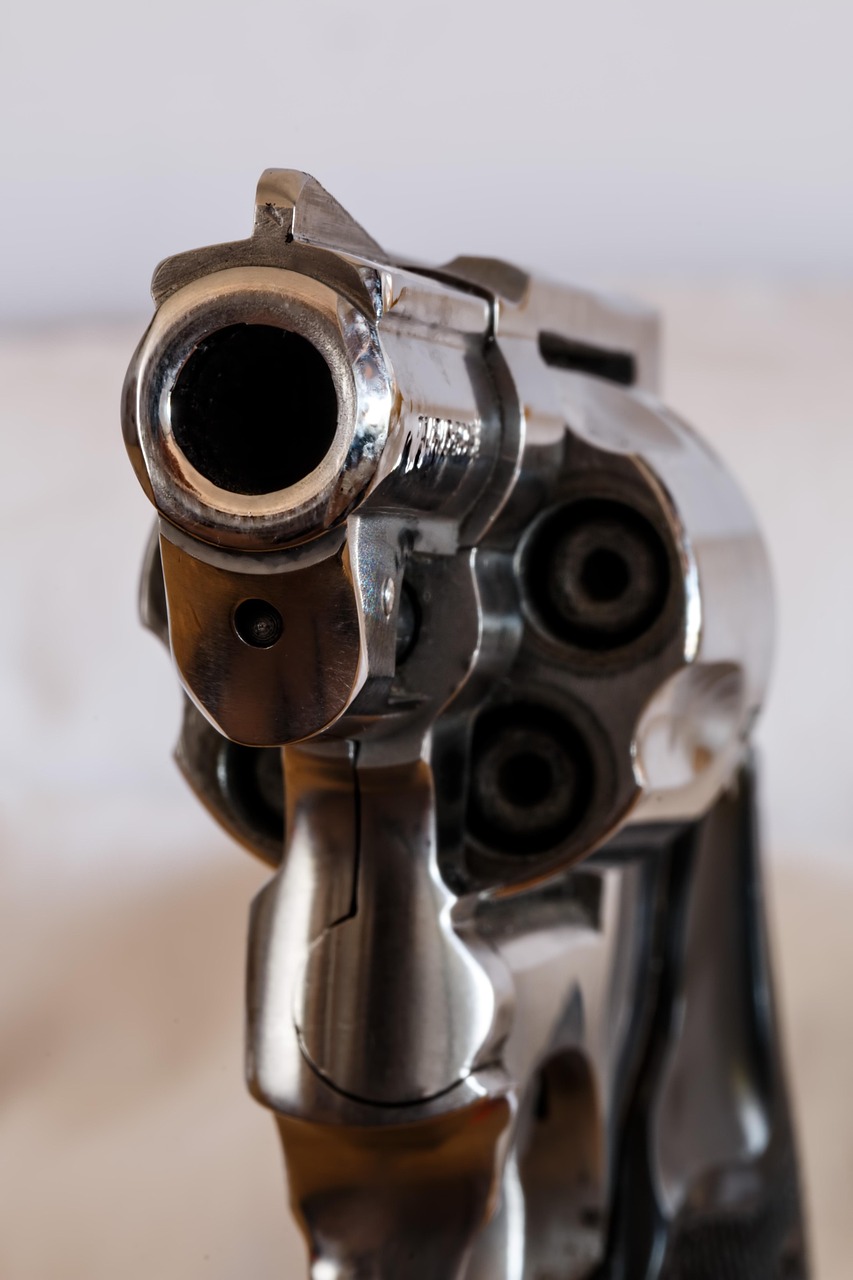
The field of firearm examination has undergone significant advancements in recent years, particularly with the integration of advanced imaging techniques. These techniques have revolutionized the way firearm examiners analyze evidence, providing more accurate and detailed results. One of the key terms in this field is ballistics, which refers to the study of the trajectory of projectiles, such as bullets, and the effects of friction and gravity on their motion.
In the context of firearm examination, ballistics is crucial in understanding the behavior of bullets as they travel through the air and interact with surfaces. By analyzing the trajectory of a bullet, examiners can reconstruct the events surrounding a shooting incident and identify the type of firearm used. This information is critical in criminal investigations and can help investigators piece together the circumstances of a crime.
Another important term in firearm examination is rifling, which refers to the spiral grooves cut into the barrel of a firearm. These grooves impart a spin on the bullet as it exits the barrel, stabilizing its flight and improving accuracy. The unique rifling patterns found on bullets can be used to identify the type of firearm used and are a key area of focus in ballistic analysis.
The process of analyzing bullets and cartridge cases is known as comparative analysis, which involves comparing the unique characteristics of a bullet or cartridge case found at a crime scene to those found in a known firearm. This process requires specialized equipment, such as microscopes and comparison microscopes, which allow examiners to examine the fine details of bullets and cartridge cases.
One of the challenges in firearm examination is the degradation of evidence, which can occur due to environmental factors such as heat, moisture, or physical damage. This degradation can make it difficult or impossible to recover usable evidence, highlighting the importance of proper evidence handling and storage procedures.
In recent years, advanced imaging techniques such as scanning electron microscopy (SEM) and X-ray computed tomography (CT) have been applied to firearm examination. These techniques provide high-resolution images of the surface and internal structures of bullets and cartridge cases, allowing examiners to visualize details that may not be visible with traditional microscopy techniques.
The use of SEM in firearm examination has been particularly useful in analyzing the surface topography of bullets and cartridge cases. By creating high-resolution images of the surface features of these items, examiners can identify unique characteristics such as scratches, striations, and pits that can be used to identify the type of firearm used.
X-ray CT has also been used in firearm examination to analyze the internal structures of bullets and cartridge cases. This technique provides detailed images of the internal components of these items, such as the bullet core and propellant, allowing examiners to identify the type of firearm used and reconstruct the events surrounding a shooting incident.
The integration of advanced imaging techniques into firearm examination has significantly improved the accuracy and reliability of ballistic analysis. By providing high-resolution images of the surface and internal structures of bullets and cartridge cases, these techniques have enabled examiners to identify unique characteristics that can be used to identify the type of firearm used.
However, the use of advanced imaging techniques in firearm examination also presents several challenges. One of the main challenges is the interpretation of images, which requires specialized training and expertise. Examiners must be able to identify and interpret the unique characteristics of bullets and cartridge cases, which can be a complex and time-consuming process.
Another challenge is the validation of advanced imaging techniques, which is critical in ensuring the accuracy and reliability of ballistic analysis. This validation requires rigorous testing and evaluation of these techniques, as well as the development of standardized protocols for their use.
Despite these challenges, the use of advanced imaging techniques in firearm examination has the potential to significantly improve the accuracy and reliability of ballistic analysis. By providing high-resolution images of the surface and internal structures of bullets and cartridge cases, these techniques can help examiners identify unique characteristics that can be used to identify the type of firearm used.
The application of advanced imaging techniques in firearm examination is not limited to ballistic analysis. These techniques can also be used to analyze other types of evidence, such as toolmarks and footwear impressions. By providing high-resolution images of the surface and internal structures of these items, advanced imaging techniques can help examiners identify unique characteristics that can be used to reconstruct the events surrounding a crime.
In addition to ballistic analysis, advanced imaging techniques can also be used in firearm examination to analyze gunshot residues. These residues are deposited on surfaces when a firearm is discharged and can provide valuable information about the type of firearm used and the distance between the muzzle and the target.
The analysis of gunshot residues using advanced imaging techniques such as SEM and X-ray CT can provide detailed information about the composition and morphology of these residues. By examining the size and shape of gunshot residues, examiners can determine the type of firearm used and the distance between the muzzle and the target.
The use of advanced imaging techniques in firearm examination has also enabled the development of new methods for firearm identification. One of these methods is virtual comparison, which involves creating digital models of bullets and cartridge cases and comparing them to known firearms.
Virtual comparison has several advantages over traditional comparative analysis, including the ability to analyze large numbers of bullets and cartridge cases quickly and efficiently. This method also eliminates the need for physical comparison, reducing the risk of damage to evidence.
However, virtual comparison also presents several challenges, including the need for specialized software and hardware. Examiners must also be trained in the use of these systems, which can be complex and require significant expertise.
Despite these challenges, virtual comparison has the potential to significantly improve the accuracy and reliability of firearm identification. By providing a rapid and efficient method for analyzing large numbers of bullets and cartridge cases, this method can help examiners identify the type of firearm used in a crime.
The integration of advanced imaging techniques into firearm examination has also enabled the development of new methods for ballistic trajectory analysis. One of these methods is 3D reconstruction, which involves creating digital models of crime scenes and analyzing the trajectory of bullets.
3D reconstruction has several advantages over traditional methods of ballistic trajectory analysis, including the ability to analyze complex crime scenes and reconstruct the events surrounding a shooting incident. This method also provides a detailed and accurate representation of the trajectory of bullets, allowing examiners to determine the type of firearm used and the distance between the muzzle and the target.
However, 3D reconstruction also presents several challenges, including the need for specialized software and hardware.
Despite these challenges, 3D reconstruction has the potential to significantly improve the accuracy and reliability of ballistic trajectory analysis. By providing a detailed and accurate representation of the trajectory of bullets, this method can help examiners reconstruct the events surrounding a shooting incident and identify the type of firearm used.
The use of advanced imaging techniques in firearm examination has also enabled the development of new methods for firearm classification. One of these methods is machine learning, which involves training algorithms to recognize patterns in images of bullets and cartridge cases.
Machine learning has several advantages over traditional methods of firearm classification, including the ability to analyze large numbers of images quickly and efficiently. This method also eliminates the need for human interpretation, reducing the risk of error.
However, machine learning also presents several challenges, including the need for large datasets of images and the risk of bias in the algorithms.
Despite these challenges, machine learning has the potential to significantly improve the accuracy and reliability of firearm classification. By providing a rapid and efficient method for analyzing large numbers of images, this method can help examiners identify the type of firearm used in a crime.
In addition to machine learning, other advanced imaging techniques such as deep learning and neural networks are also being applied to firearm examination. These techniques involve training algorithms to recognize patterns in images of bullets and cartridge cases, allowing for the automated classification of firearms.
The use of deep learning and neural networks in firearm examination has several advantages, including the ability to analyze large numbers of images quickly and efficiently. These methods also eliminate the need for human interpretation, reducing the risk of error.
However, deep learning and neural networks also present several challenges, including the need for large datasets of images and the risk of bias in the algorithms.
Despite these challenges, deep learning and neural networks have the potential to significantly improve the accuracy and reliability of firearm classification. By providing a rapid and efficient method for analyzing large numbers of images, these methods can help examiners identify the type of firearm used in a crime.
The integration of advanced imaging techniques into firearm examination has also enabled the development of new methods for firearm reconstruction. One of these methods is reverse engineering, which involves creating digital models of firearms and analyzing their internal and external structures.
Reverse engineering has several advantages over traditional methods of firearm reconstruction, including the ability to analyze complex firearms and reconstruct their internal and external structures. This method also provides a detailed and accurate representation of the firearm, allowing examiners to determine its type and caliber.
However, reverse engineering also presents several challenges, including the need for specialized software and hardware.
Despite these challenges, reverse engineering has the potential to significantly improve the accuracy and reliability of firearm reconstruction. By providing a rapid and efficient method for analyzing complex firearms, this method can help examiners reconstruct the events surrounding a shooting incident and identify the type of firearm used.
In addition to reverse engineering, other advanced imaging techniques such as 3D printing and laser scanning are also being applied to firearm examination. These techniques involve creating digital models of firearms and analyzing their internal and external structures, allowing for the automated reconstruction of firearms.
The use of 3D printing and laser scanning in firearm examination has several advantages, including the ability to analyze complex firearms and reconstruct their internal and external structures. These methods also provide a detailed and accurate representation of the firearm, allowing examiners to determine its type and caliber.
However, 3D printing and laser scanning also present several challenges, including the need for specialized software and hardware.
Despite these challenges, 3D printing and laser scanning have the potential to significantly improve the accuracy and reliability of firearm reconstruction. By providing a rapid and efficient method for analyzing complex firearms, these methods can help examiners reconstruct the events surrounding a shooting incident and identify the type of firearm used.
The integration of advanced imaging techniques into firearm examination has the potential to significantly improve the accuracy and reliability of ballistic analysis and firearm identification.
However, the use of advanced imaging techniques in firearm examination also presents several challenges, including the need for specialized software and hardware, and the risk of bias in the algorithms.
Despite these challenges, advanced imaging techniques have the potential to significantly improve the accuracy and reliability of firearm examination. By providing a rapid and efficient method for analyzing large numbers of bullets and cartridge cases, these techniques can help examiners identify the type of firearm used in a crime and reconstruct the events surrounding a shooting incident.
The application of advanced imaging techniques in firearm examination is not limited to ballistic analysis and firearm identification.
In addition to advanced imaging techniques, other technologies such as artificial intelligence and machine learning are also being applied to firearm examination. These technologies involve training algorithms to recognize patterns in images of bullets and cartridge cases, allowing for the automated classification of firearms.
The use of artificial intelligence and machine learning in firearm examination has several advantages, including the ability to analyze large numbers of images quickly and efficiently.
However, artificial intelligence and machine learning also present several challenges, including the need for large datasets of images and the risk of bias in the algorithms.
Despite these challenges, artificial intelligence and machine learning have the potential to significantly improve the accuracy and reliability of firearm examination. By providing a rapid and efficient method for analyzing large numbers of images, these methods can help examiners identify the type of firearm used in a crime and reconstruct the events surrounding a shooting incident.
The integration of advanced imaging techniques and other technologies such as artificial intelligence and machine learning into firearm examination has the potential to significantly improve the accuracy and reliability of ballistic analysis and firearm identification.
However, the use of advanced imaging techniques and other technologies in firearm examination also presents several challenges, including the need for specialized software and hardware, and the risk of bias in the algorithms.
Despite these challenges, advanced imaging techniques and other technologies have the potential to significantly improve the accuracy and reliability of firearm examination.
In the future, it is likely that advanced imaging techniques and other technologies such as artificial intelligence and machine learning will continue to play an increasingly important role in firearm examination. As these technologies continue to evolve and improve, they will provide examiners with new and powerful tools for analyzing evidence and reconstructing the events surrounding a crime.
The use of advanced imaging techniques and other technologies in firearm examination will also require significant investment in training and education. Examiners will need to be trained in the use of these systems, which can be complex and require significant expertise.
Despite these challenges, the integration of advanced imaging techniques and other technologies into firearm examination has the potential to significantly improve the accuracy and reliability of ballistic analysis and firearm identification.
The application of advanced imaging techniques and other technologies in firearm examination is not limited to ballistic analysis and firearm identification.
In conclusion, the integration of advanced imaging techniques and other technologies into firearm examination has the potential to significantly improve the accuracy and reliability of ballistic analysis and firearm identification.
As advanced imaging techniques and other technologies continue to evolve and improve, they will provide examiners with new and powerful tools for analyzing evidence and reconstructing the events surrounding a crime. The integration of these technologies into firearm examination has the potential to significantly improve the accuracy and reliability of ballistic analysis and firearm identification, and will likely play an increasingly important role in the future of firearm examination.
The application of advanced imaging techniques and other technologies in firearm examination is a rapidly evolving field, with new technologies and techniques being developed and applied on a regular basis. As these technologies continue to improve and become more widely available, they will provide examiners with new and powerful tools for analyzing evidence and reconstructing the events surrounding a crime.
The integration of these technologies into firearm examination has the potential to significantly improve the accuracy and reliability of ballistic analysis and firearm identification, and will likely require significant investment in training and education.
The use of advanced imaging techniques and other technologies in firearm examination will also require the development of new protocols and procedures for the analysis and interpretation of evidence. These protocols and procedures will need to be developed and validated in order to ensure the accuracy and reliability of ballistic analysis and firearm identification.
The integration of advanced imaging techniques and other technologies into firearm examination has the potential to significantly improve the accuracy and reliability of ballistic analysis and firearm identification.
The integration of these technologies into firearm examination has the potential to significantly improve the accuracy and reliability of ballistic analysis and firearm identification, and will likely require significant investment in training and education.
Key takeaways
- One of the key terms in this field is ballistics, which refers to the study of the trajectory of projectiles, such as bullets, and the effects of friction and gravity on their motion.
- In the context of firearm examination, ballistics is crucial in understanding the behavior of bullets as they travel through the air and interact with surfaces.
- The unique rifling patterns found on bullets can be used to identify the type of firearm used and are a key area of focus in ballistic analysis.
- This process requires specialized equipment, such as microscopes and comparison microscopes, which allow examiners to examine the fine details of bullets and cartridge cases.
- One of the challenges in firearm examination is the degradation of evidence, which can occur due to environmental factors such as heat, moisture, or physical damage.
- These techniques provide high-resolution images of the surface and internal structures of bullets and cartridge cases, allowing examiners to visualize details that may not be visible with traditional microscopy techniques.
- The use of SEM in firearm examination has been particularly useful in analyzing the surface topography of bullets and cartridge cases.